

FCC Reviews SpaceX Orbital AI Data Center Plan
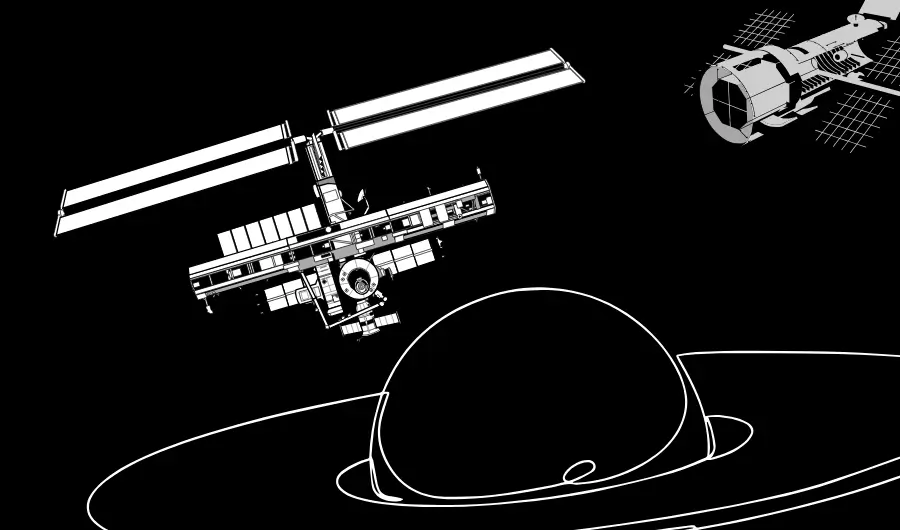
The U.S. Federal Communications Commission (FCC) has formally accepted and opened for public comment a regulatory filing by SpaceX for an ambitious “orbital data center” satellite system, initiating the first step in the agency’s review process.
The proposal, submitted following SpaceX’s recent acquisition of Elon Musk’s artificial-intelligence company xAI, describes a non-geostationary constellation designed to host space-based computing infrastructure tied to SpaceX’s existing Starlink network. The FCC’s notice begins a public comment period extending through March 6, 2026, during which industry stakeholders, researchers, and public interest groups may submit feedback.
Regulatory Action and Filing Overview
In late January 2026, SpaceX filed an application with the FCC seeking authorization to deploy and operate a non-geostationary satellite system that would support computing functions traditionally performed in terrestrial data centers. The FCC’s action on Wednesday formally accepted the filing for review and opened a comment window, signalling that the agency will assess technical, environmental, and policy issues raised by the proposal. The acceptance by the FCC does not equate to approval of the system; rather, it positions the application within the regulatory framework for further analysis.
The proposed satellite constellation is described by SpaceX as an “Orbital Data Center” system, intended to link optical high-bandwidth inter-satellite communications with the company’s existing Starlink network. According to the filing, this infrastructure would enable data to be routed, processed, and transmitted in orbit through laser communications and then downlinked to ground stations, integrating compute and connectivity functions. The FCC’s notice emphasised that it is soliciting public comment on the application and associated waiver requests during the defined review period.
The orbital system would reportedly operate across altitudes from roughly 310 miles to over 1,200 miles above Earth, with optical inter-satellite links forming the connective backbone of the network. Integration with Starlink’s existing satellites is central to SpaceX’s concept, which in its filing argues that on-orbit processing could address increasing energy and cooling constraints faced by terrestrial facilities.
Post-Acquisition Context and Technical Scope
SpaceX’s regulatory filing follows its acquisition of xAI, Musk’s artificial-intelligence venture, in a deal that industry reporting placed at indicative valuations of approximately $1 trillion for SpaceX and about $250 billion for xAI. The merger consolidates SpaceX’s launch and satellite capabilities with xAI’s compute and model development resources, aligning corporate strategy around expanded space-based AI infrastructure.
In outlining the orbital data center concept, SpaceX noted that space-based computing could leverage near-constant solar energy and potentially reduce reliance on terrestrial power and cooling infrastructure, which are under strain as AI workloads increase. The filing also framed the proposal as advancing energy-efficient AI compute for a range of users, including commercial and government customers.
Industry media coverage and filings indicate that the technical scope of the proposal includes the potential deployment of up to one million satellites configured as part of the orbital system. These data-center-style satellites would operate at various low Earth orbit altitudes, interlinked by laser communications and designed to interface with Starlink’s connectivity backbone. The scale of this proposed constellation significantly exceeds SpaceX’s existing Starlink network, which comprises thousands of communications satellites already in operation.
While technical and economic feasibility challenges remain a subject of industry interest, the FCC’s procedural step to open the application for public comment is a formal prerequisite for any future authorization decision. Stakeholders contributing to the comment docket may address spectrum coordination, orbital debris risk, competition policy, and environmental impacts among other considerations.
Public Comment Period and Next Steps
The FCC’s acceptance of SpaceX’s orbital data center filing triggers a public comment period extending to early March 2026. During this regulatory window, affiliated organisations, competitors, and civil society groups can submit written views that will become part of the administrative record for the proposal. The commission will then evaluate the application, related technical qualifications, and evidence presented in comments before making any determination on waivers or grants of authority.
The FCC’s move follows recent approval of an expansion of SpaceX’s second-generation Starlink network authorisation, which included permission for additional satellites. However, regulators and industry observers stress that the new orbital data center system represents a distinct set of policy and technical implications separate from traditional communications services.
As the review process continues, the regulatory focus will remain on the assessment of SpaceX’s compliance with FCC requirements for non-geostationary satellite systems, potential impacts on orbital environments, and the broader implications of integrating space-based compute infrastructure with existing terrestrial and orbital networks.
AI Informed Newsletter
Stay informed on the fastest growing technology.
Disclaimer: The content on this page and all pages are for informational purposes only. We use AI to develop and improve our content — we love to use the tools we promote.
Course creators can promote their courses with us and AI apps Founders can get featured mentions on our website, send us an email.
Simplify AI use for the masses, enable anyone to leverage artificial intelligence for problem solving, building products and services that improves lives, creates wealth and advances economies.
A small group of researchers, educators and builders across AI, finance, media, digital assets and general technology.
If we have a shot at making life better, we owe it to ourselves to take it. Artificial intelligence (AI) brings us closer to abundance in health and wealth and we're committed to playing a role in bringing the use of this technology to the masses.
We aim to promote the use of AI as much as we can. In addition to courses, we will publish free prompts, guides and news, with the help of AI in research and content optimization.
We use cookies and other software to monitor and understand our web traffic to provide relevant contents, protection and promotions. To learn how our ad partners use your data, send us an email.
© newvon | all rights reserved | sitemap