

Google Engineer, Linwei Ding found Guilty of AI Trade Secret Theft | News
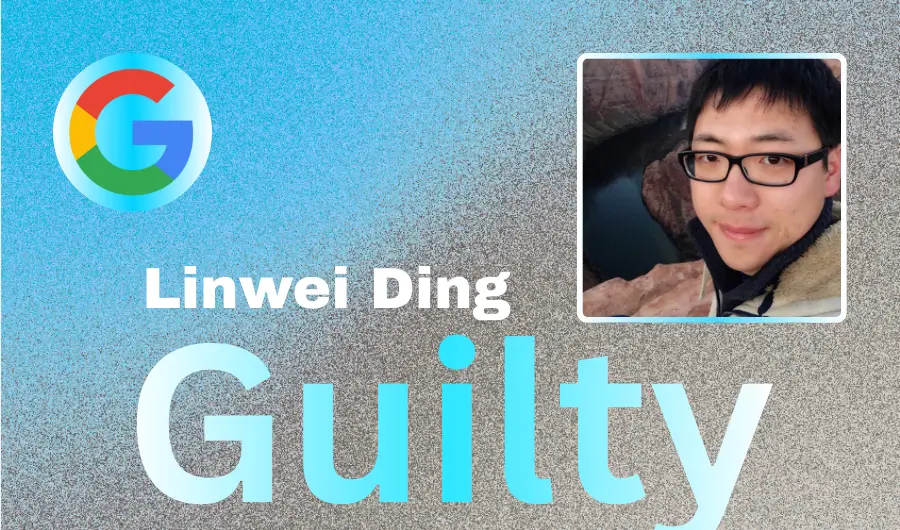
A federal jury in San Francisco has convicted former Google software engineer Linwei “Leon” Ding on 14 felony counts for stealing artificial intelligence (AI) trade secrets from Google and transferring the stolen material to benefit entities linked to China, the U.S. Department of Justice said. The verdict, returned following an 11-day trial, includes seven counts of economic espionage and seven counts of theft of trade secrets.
Linwei Ding, 38, who worked at Google from 2019 until April 2023, was found guilty on January 29, 2026, of unlawfully copying and uploading more than 2,000 pages of confidential internal documents related to Google’s AI and supercomputing technologies while secretly engaging with China-based technology companies and pursuing his own China-targeted AI venture.
Ding’s role at Google gave him access to highly sensitive information about the company’s AI infrastructure, including proprietary designs and operational details for custom Tensor Processing Unit (TPU) accelerators, Graphics Processing Unit (GPU) systems, SmartNIC networking technologies, and software platforms that orchestrate large-scale machine learning workloads. Prosecutors presented evidence that between approximately May 2022 and April 2023, Ding downloaded thousands of pages of this material from Google’s internal networks to his personal accounts.
According to court filings, Ding covertly transferred the stolen files by copying source code into note-taking applications on his work device, converting the material into portable document format (PDF) files, and uploading them to his personal cloud storage. These actions were executed while he remained employed at Google, without informing the company of his affiliations with external technology entities.
During the period of the theft, Ding was allegedly in discussions to serve as chief technology officer for an early-stage tech firm in China and was in the process of founding his own AI and machine learning company based in the People’s Republic of China. Prosecutors said he had also applied for a government-sponsored talent recruitment program in Shanghai that promotes the transfer of technical expertise to Chinese industry.
The DOJ’s superseding indictment, returned in February 2025, outlined seven categories of trade secrets that Ding unlawfully obtained and charged him with a combination of economic espionage and trade secret theft. Evidence introduced at trial showed that the stolen information included detailed hardware specifications, system architecture data, performance analyses, and software configurations critical to Google’s competitive advantage in AI development.
Each count of economic espionage carries a maximum penalty of 15 years in prison and up to $5 million in fines under 18 U.S.C. § 1831, while each count of trade secret theft carries up to 10 years in prison and fines under 18 U.S.C. § 1832. Ding’s next scheduled court appearance is a status conference on February 3, 2026, pending sentencing proceedings that will consider federal sentencing guidelines and statutory factors.
Federal prosecutors described the conviction as a significant enforcement action aimed at protecting advanced technological innovations from unlawful appropriation. Assistant Attorney General for National Security John A. Eisenberg said the case revealed “a calculated breach of trust involving some of the most advanced AI technology in the world,” and underscored the commitment of U.S. authorities to uphold laws safeguarding critical commercial information.
Google, which was not charged in the case, cooperated with law enforcement throughout the investigation. Company representatives have stated that internal safeguards are in place to protect confidential commercial information and that the firm referred its findings to authorities upon discovering evidence of unauthorized data access.
The conviction comes amid heightened scrutiny by U.S. federal agencies of threats to intellectual property in strategic technology sectors, with prosecutors and national security officials citing concerns about insider risks and the transfer of cutting-edge technological know-how to foreign entities.
AI Informed Newsletter
Stay informed on the fastest growing technology.
Disclaimer: The content on this page and all pages are for informational purposes only. We use AI to develop and improve our content — we love to use the tools we promote.
Course creators can promote their courses with us and AI apps Founders can get featured mentions on our website, send us an email.
Simplify AI use for the masses, enable anyone to leverage artificial intelligence for problem solving, building products and services that improves lives, creates wealth and advances economies.
A small group of researchers, educators and builders across AI, finance, media, digital assets and general technology.
If we have a shot at making life better, we owe it to ourselves to take it. Artificial intelligence (AI) brings us closer to abundance in health and wealth and we're committed to playing a role in bringing the use of this technology to the masses.
We aim to promote the use of AI as much as we can. In addition to courses, we will publish free prompts, guides and news, with the help of AI in research and content optimization.
We use cookies and other software to monitor and understand our web traffic to provide relevant contents, protection and promotions. To learn how our ad partners use your data, send us an email.
© newvon | all rights reserved | sitemap