

Who Is Jensen Huang? | Biography
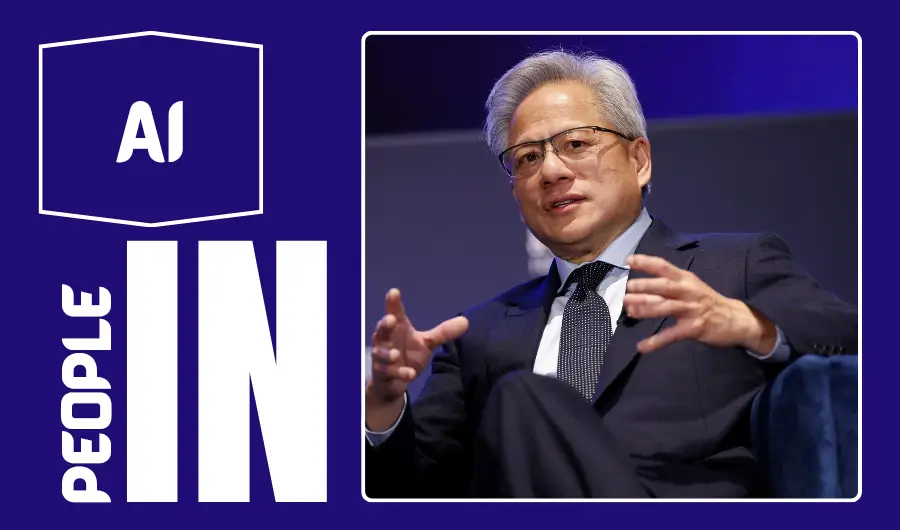
Jensen Huang is a Taiwanese-American entrepreneur, engineer, and business leader best known as the co-founder, president, and chief executive officer of NVIDIA Corporation.
Widely regarded as one of the most influential figures in modern computing, Huang has played a pivotal role in shaping the graphics processing unit (GPU) industry and, more broadly, the trajectory of artificial intelligence, accelerated computing, and high-performance data center architecture. Under his leadership, NVIDIA evolved from a niche graphics chip startup into one of the world’s most valuable technology companies, central to advances in AI, gaming, autonomous systems, and scientific computing.
Huang’s career reflects a rare combination of technical depth, long-term strategic vision, and founder-led resilience. Over three decades, he has guided NVIDIA through multiple technology cycles, market disruptions, and competitive challenges, consistently repositioning the company at the forefront of computing innovation. His influence extends beyond NVIDIA itself, as GPUs and CUDA software have become foundational tools across academia, industry, and government research institutions worldwide.
Early Life and Family Background
Jensen Huang was born on February 17, 1963, in Tainan City, Taiwan. His early childhood coincided with a period of rapid economic and industrial transformation in Taiwan, which was beginning to establish itself as a major hub for electronics manufacturing. When Huang was still young, his family relocated to Thailand due to his father’s work. However, geopolitical instability in the region prompted his parents to send Jensen and his older brother to the United States for their education.
At the age of nine, Huang arrived in the U.S. and was enrolled at Oneida Baptist Institute, a strict boarding school in rural Kentucky. The experience was formative and challenging. Language barriers, cultural adjustment, and demanding discipline shaped Huang’s early character, instilling resilience, self-reliance, and a strong work ethic. These traits would later become defining elements of his leadership style.
Eventually, Huang reunited with his family in Oregon, where he continued his education. His early exposure to multiple cultures and environments contributed to a global perspective that would later inform NVIDIA’s international growth and manufacturing strategy.
Education and Academic Foundations
Jensen Huang pursued higher education with a focus on engineering, demonstrating an early aptitude for problem-solving and systems thinking. He earned a Bachelor of Science degree in Electrical Engineering from Oregon State University in 1984. During his undergraduate years, Huang developed a strong interest in semiconductor design, digital systems, and the underlying hardware that powers modern computing.
He later attended Stanford University, where he received a Master of Science degree in Electrical Engineering in 1992. Stanford’s proximity to Silicon Valley and its entrepreneurial culture played a significant role in shaping Huang’s ambitions. The university environment exposed him to cutting-edge research, venture capital networks, and the idea that small teams could build transformative technology companies.
Stanford also reinforced Huang’s belief in the long-term importance of parallel computing, a concept that would later become central to NVIDIA’s technical philosophy.
Early Career in Silicon Valley
Before founding NVIDIA, Jensen Huang gained industry experience at two prominent technology companies. He began his professional career at LSI Logic, a semiconductor firm specializing in custom and standard integrated circuits. At LSI Logic, Huang worked as a microprocessor designer, gaining hands-on experience in chip architecture, manufacturing constraints, and the economics of the semiconductor industry.
He later joined Advanced Micro Devices (AMD), where he served as director of core logic. At AMD, Huang was exposed to the highly competitive CPU and chipset markets, learning firsthand how strategic decisions in product design, pricing, and execution could determine success or failure. This period sharpened his understanding of how to compete against larger incumbents and how to differentiate through innovation.
These early roles provided Huang with both technical credibility and managerial insight, preparing him for the risks and demands of entrepreneurship.
Founding NVIDIA in 1993
In 1993, Jensen Huang co-founded NVIDIA alongside Chris Malachowsky and Curtis Priem. The company was established with a bold vision: to harness the power of parallel computing to solve complex problems that traditional CPUs could not efficiently address. At the time, the graphics market was fragmented, competitive, and technologically immature, making NVIDIA’s ambitions both risky and unconventional.
Huang assumed the role of president and CEO from the company’s inception, a position he has held continuously. From the outset, he emphasized speed, innovation, and a willingness to take calculated risks. NVIDIA’s early years were marked by financial uncertainty and intense competition, including a near-failure that threatened the company’s survival in the late 1990s.
The release of the RIVA 128 graphics chip in 1997 proved to be a turning point. The product achieved commercial success and established NVIDIA as a credible player in the graphics market. Two years later, the introduction of the GeForce 256, marketed as the world’s first GPU, solidified NVIDIA’s leadership and redefined the category.
The Rise of the GPU Industry
Under Jensen Huang’s leadership, NVIDIA fundamentally reshaped the concept of graphics processing. Rather than viewing GPUs solely as components for rendering images in video games, Huang envisioned them as highly parallel processors capable of accelerating a wide range of computational tasks.
This broader perspective allowed NVIDIA to consistently push the boundaries of performance and programmability. The company’s GPUs became essential components not only for gaming but also for professional visualization, animation, and design. By investing heavily in research and development, NVIDIA maintained a rapid product cadence, often outpacing competitors in performance and efficiency.
Huang’s insistence on long-term architectural planning helped NVIDIA avoid short-term compromises, enabling sustained innovation across multiple generations of products.
CUDA and the Shift to General-Purpose Computing
One of Jensen Huang’s most consequential strategic decisions was the introduction of CUDA (Compute Unified Device Architecture) in 2006. CUDA transformed NVIDIA GPUs from fixed-function graphics accelerators into programmable platforms for general-purpose computing.
At the time, the idea that GPUs could be used for scientific computing, machine learning, and data analytics was far from mainstream. Huang championed this vision despite skepticism from parts of the industry. CUDA provided developers with a software framework to write parallel programs that could run efficiently on GPUs, dramatically expanding the addressable market for NVIDIA hardware.
This move laid the groundwork for the explosion of GPU-accelerated computing in fields such as physics, genomics, finance, and eventually artificial intelligence. CUDA became a key competitive moat for NVIDIA, fostering a vast ecosystem of developers, libraries, and applications.
Jensen Huang and the AI Revolution
Jensen Huang is widely credited as one of the earliest major technology CEOs to recognize the transformative potential of artificial intelligence and deep learning. As neural networks began to show promise in the late 2000s and early 2010s, Huang identified GPUs as ideally suited for the parallel computations required by AI models.
Under his leadership, NVIDIA invested aggressively in AI-focused hardware, software, and research partnerships. The company’s GPUs became the standard platform for training deep learning models, powering breakthroughs in image recognition, natural language processing, and speech synthesis.
Huang frequently articulated the concept of “accelerated computing,” arguing that traditional CPU-centric architectures were insufficient for modern workloads. This philosophy positioned NVIDIA at the center of the AI boom, with its technologies underpinning data centers, cloud platforms, and research institutions around the world.
Expansion into Data Centers and Cloud Computing
As AI adoption accelerated, Jensen Huang led NVIDIA’s expansion beyond consumer graphics into data center infrastructure. NVIDIA developed specialized GPUs and networking solutions designed for large-scale computing environments, including products optimized for AI training and inference.
Strategic acquisitions, such as Mellanox Technologies in 2020, strengthened NVIDIA’s capabilities in high-performance networking. Huang viewed data centers as “AI factories,” where massive computational resources convert data into intelligence. This framing resonated with enterprise customers and cloud service providers, further solidifying NVIDIA’s role in the modern computing stack.
By the early 2020s, data center revenue had become one of NVIDIA’s largest and fastest-growing segments, reflecting Huang’s ability to anticipate and capitalize on industry shifts.
Leadership Style and Corporate Culture
Jensen Huang is known for his intense, hands-on leadership style and high expectations. He emphasizes clarity of purpose, rigorous execution, and direct communication. Internally, Huang is famous for his detailed product reviews and insistence that teams deeply understand both technology and customer needs.
Despite his demanding standards, Huang is also known for loyalty and long-term commitment to employees. NVIDIA’s culture encourages innovation, risk-taking, and continuous learning. Huang has often stated that the company’s success depends on assembling exceptional talent and empowering them to pursue ambitious goals.
His leadership philosophy blends engineering discipline with entrepreneurial urgency, contributing to NVIDIA’s reputation as one of the most innovative companies in the technology sector.
Public Image and Signature Style
Jensen Huang has cultivated a distinctive public image that reflects both confidence and approachability. He is often recognized for his trademark black leather jacket, which has become synonymous with NVIDIA’s brand and keynote presentations. This consistent visual identity reinforces his presence as a founder-CEO deeply associated with the company’s vision.
Huang is a frequent keynote speaker at major technology conferences, including NVIDIA’s own GTC (GPU Technology Conference). His presentations are known for technical depth, strategic clarity, and theatrical flair, often unveiling major product announcements and outlining the future of computing.
Financial Success and Net Worth
As NVIDIA’s market capitalization surged during the AI boom, Jensen Huang’s personal wealth increased substantially. As a co-founder and long-time CEO, he holds a significant equity stake in the company. By the mid-2020s, Huang was widely reported to be among the wealthiest executives in the technology industry.
However, Huang has consistently framed financial success as a byproduct of innovation rather than an end goal. In interviews, he emphasizes long-term value creation, technological leadership, and societal impact over short-term financial metrics.
Philanthropy and Social Impact
Jensen Huang and his wife, Lori Huang, have been active in philanthropy, particularly in the areas of education and engineering research. The Huangs have made substantial donations to universities, including Stanford University and Oregon State University, supporting scholarships, research initiatives, and engineering facilities.
Huang has also advocated for STEM education and the importance of cultivating the next generation of engineers and scientists. Through NVIDIA, he has supported initiatives aimed at democratizing access to AI tools and fostering innovation in underserved communities.
Legacy and Long-Term Influence
Jensen Huang’s legacy extends far beyond NVIDIA’s financial success. He is widely regarded as a visionary who redefined the role of GPUs and helped usher in the era of AI-driven computing. His long tenure as CEO is unusual in the fast-moving technology industry, highlighting his adaptability and strategic foresight.
By consistently betting on parallel computing, software ecosystems, and long-term research, Huang positioned NVIDIA as a foundational company in the modern digital economy. His influence can be seen in everything from autonomous vehicles and medical imaging to climate modeling and generative AI.
Conclusion
Jensen Huang is more than a semiconductor executive; he is a defining figure in the evolution of modern computing. As the co-founder and CEO of NVIDIA, he transformed a small graphics startup into a global technology powerhouse that sits at the heart of the AI revolution. Through technical vision, disciplined leadership, and an unwavering belief in accelerated computing, Huang reshaped industries and enabled breakthroughs that continue to redefine what machines can do.
His career stands as a case study in long-term thinking, founder-led leadership, and the power of aligning technological innovation with bold strategic vision.
AI Informed Newsletter
Stay informed on the fastest growing technology.
Disclaimer: The content on this page and all pages are for informational purposes only. We use AI to develop and improve our content — we love to use the tools we promote.
Course creators can promote their courses with us and AI apps Founders can get featured mentions on our website, send us an email.
Simplify AI use for the masses, enable anyone to leverage artificial intelligence for problem solving, building products and services that improves lives, creates wealth and advances economies.
A small group of researchers, educators and builders across AI, finance, media, digital assets and general technology.
If we have a shot at making life better, we owe it to ourselves to take it. Artificial intelligence (AI) brings us closer to abundance in health and wealth and we're committed to playing a role in bringing the use of this technology to the masses.
We aim to promote the use of AI as much as we can. In addition to courses, we will publish free prompts, guides and news, with the help of AI in research and content optimization.
We use cookies and other software to monitor and understand our web traffic to provide relevant contents, protection and promotions. To learn how our ad partners use your data, send us an email.
© newvon | all rights reserved | sitemap