

Liza Minnelli Releases First New Song in 13 Years Using AI | News
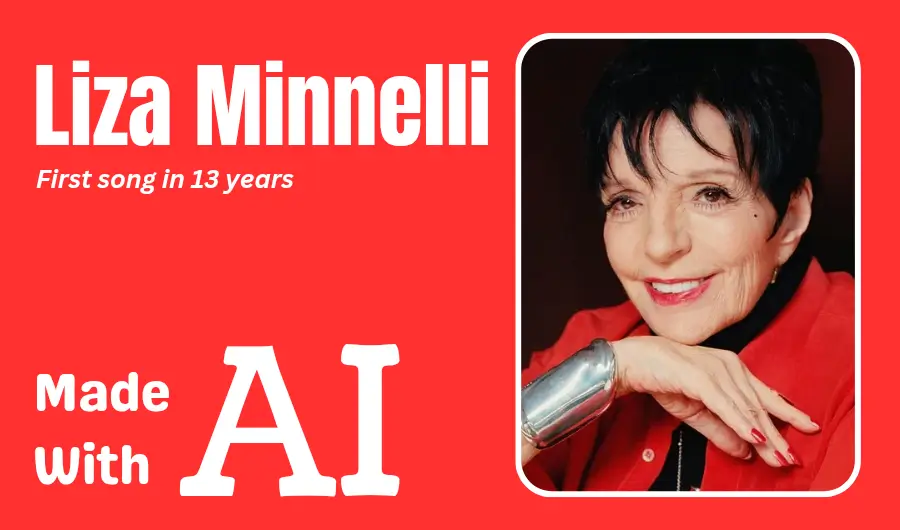
Legendary entertainer, Liza Minnelli, has released her first new musical work in 13 years, debuting an AI-assisted electronic dance track titled Kids, Wait Till You Hear This.
The single marks a notable return for the 79-year-old performer and coincides with the upcoming release of her memoir of the same name. The song was produced in collaboration with AI developer ElevenLabs, which provided the musical arrangement using artificial intelligence, while Minnelli contributed her own spoken vocals.
The release is part of The Eleven Album, a multi-artist project that pairs human performers with AI-generated music.
Minnelli’s new track represents her first official release since 2013, when she contributed a song to the television series Smash. The EDM-inspired piece ventures into deep house territory, illustrating a stylistic departure from her earlier work. While the arrangement was created using AI technology, Minnelli emphasized that her voice on the track remains entirely original and unaltered by artificial intelligence.
AI-Assisted Music Part of New Industry Collaboration
Kids, Wait Till You Hear This is featured on The Eleven Album, a compilation project by ElevenLabs that showcases collaborations between living artists and AI systems. In addition to Minnelli’s contribution, the project includes tracks by other established musicians such as Art Garfunkel, whose piece features spoken excerpts from his memoir over AI-created piano backing. ElevenLabs CEO Mati Staniszewski described the project as part of a broader effort to blend human creativity with AI while maintaining rights for the contributing artists.
ElevenLabs, founded by former Google engineer Piotr Dąbkowski and Staniszewski, has expanded its focus beyond AI voice synthesis to music generation. The company runs a “creator-first, rights-secure framework” that aims to preserve artistic ownership and revenue for artists participating in AI collaborations. The album, now available on major streaming platforms, spans genres from electronic to R&B and pop.
Minnelli Emphasizes Artistic Integrity
Minnelli took to social media to share her reaction to releasing new music with AI involvement. In her post, she expressed enthusiasm about the track’s release and made clear distinctions regarding the technology’s role in the creative process. She wrote that the AI was used for musical arrangement and that she prohibited the company from replicating or copying her vocal performance. Her social media address aimed to clarify misinformation and reaffirm her artistic intentions.
In a press release accompanying the release, Minnelli elaborated on her artistic goals, highlighting her belief in music as a vehicle for emotional connection and expression. She stated that her interest lay in using new tools to serve artistic expression rather than replace the artist, stressing that the project respects the artist’s voice, choices, and ownership. She also reflected on her early exposure to entertainment, noting that her parents’ creative works were often owned by others and contrasting that with the current project’s ownership model.
Mixed Fan and Industry Reaction to AI Involvement
Reaction to Minnelli’s use of AI has been mixed among fans and within the broader music community. Some listeners have praised the new track and Minnelli’s voice, celebrating her return and upbeat direction. Others expressed disappointment or concern about the use of artificial intelligence in music creation, reflecting broader uncertainty about the technology’s role in the arts.
The release enters an ongoing industry conversation about AI in music. Several high-profile artists, including Ed Sheeran and Lil Wayne, have voiced apprehension about the potential for AI to displace human musicians or replicate voices without proper context and compensation. These concerns highlight tensions between technological innovation and traditional creative processes in the music industry.
Context of AI in Music and Artist Control
The emergence of AI–generated music has accelerated debates about rights, creativity, and authenticity. Generative AI firms such as Udio, Suno, and Klay have established partnerships with major and independent labels, enabling access to extensive music catalogs for AI training and creation. Some of these partnerships come with rights agreements intended to ensure artists benefit from the use of their work.
Supporters of AI collaboration argue that the technology can serve as a creative tool that expands artistic possibilities, offering innovative sounds and compositional ideas. However, critics maintain that AI’s expanding role should be carefully regulated to protect the livelihoods of human composers, performers, and session musicians. These debates continue as more artists experiment with AI-assisted projects, prompting ongoing discussion about ethical frameworks and industry standards.
Minnelli’s Career and Legacy
Liza Minnelli is a celebrated figure in entertainment, widely recognized for her contributions to music, film, and theatre over several decades. Her body of work, which includes iconic performances in film and on Broadway, has earned her acclaim across genres. The release of Kids, Wait Till You Hear This represents a noteworthy addition to her discography, blending legacy performance with contemporary technological methods.
As The Eleven Album garners attention and debate, Minnelli’s involvement places her at the center of a pivotal moment in music history, where traditional artistry intersects with the growing influence of artificial intelligence.
The release reveals how established artists are navigating this evolving landscape while asserting creative and ownership rights.
Liza Minnelli’s first new music in 13 years is a defining moment in the intersection of artistic legacy and technological innovation. Through this collaboration, she has issued a dance track that reintroduces her voice to the music world while engaging with debates about the ethical and creative dimensions of AI in music production.
AI Informed Newsletter
Stay informed on the fastest growing technology.
Disclaimer: The content on this page and all pages are for informational purposes only. We use AI to develop and improve our content — we love to use the tools we promote.
Course creators can promote their courses with us and AI apps Founders can get featured mentions on our website, send us an email.
Simplify AI use for the masses, enable anyone to leverage artificial intelligence for problem solving, building products and services that improves lives, creates wealth and advances economies.
A small group of researchers, educators and builders across AI, finance, media, digital assets and general technology.
If we have a shot at making life better, we owe it to ourselves to take it. Artificial intelligence (AI) brings us closer to abundance in health and wealth and we're committed to playing a role in bringing the use of this technology to the masses.
We aim to promote the use of AI as much as we can. In addition to courses, we will publish free prompts, guides and news, with the help of AI in research and content optimization.
We use cookies and other software to monitor and understand our web traffic to provide relevant contents, protection and promotions. To learn how our ad partners use your data, send us an email.
© newvon | all rights reserved | sitemap