

What Is Logical Intelligence? | Everything you need to know
Logical Intelligence is an emerging leader in the next generation of artificial intelligence research and products. Founded by quantum physicist Eve Bodnia, this Silicon Valley-based AI company is advancing a fundamentally different paradigm of machine intelligence that moves beyond the probabilistic, language-centred models that have dominated the field for most of the past decade.
Logical Intelligence focuses on energy-based reasoning models, formal verification systems, and mathematically grounded AI architectures designed for mission-critical applications where reliability, correctness, scalability, and safety are essential.
At its core, Logical Intelligence is pursuing a vision of artificial intelligence that is robust, transparent, and logically precise — an AI that can reason in the sense that humans understand the term: by applying rules, constraints, mathematics, and deductive logic rather than by predicting patterns in data alone. This approach has significant implications not only for the future of AI technology but also for how AI can be responsibly deployed in industries that cannot tolerate errors, hallucinations, or uncontrolled behaviour.
Origins and Foundational Leadership
Logical Intelligence is the brainchild of Eve Bodnia, a quantum physicist and AI innovator whose vision is rooted in both foundational science and practical demands for trustworthy artificial reasoning. Under Bodnia’s leadership as Founder and CEO, the company has set out to redefine how machines understand, process, and verify solutions to complex problems, prioritizing correctness over likelihood in system outputs.
Unlike many AI startups that build incremental improvements on existing models, Logical Intelligence has assembled a leadership team that reflects its ambitious mission. This includes prominent figures such as Yann LeCun, one of the foremost thinkers in modern AI, who serves as the Founding Chair of the company’s Technical Research Board.
The inclusion of LeCun, a Nobel-level researcher and early architect of deep learning, signals the company’s serious commitment to rigorous scientific foundations and breakthrough innovation.
Other high-profile members of the founding leadership include experts in mathematics, machine reasoning, and formal methods, such as Fields Medalist Michael Freedman as Chief of Mathematics and Vlad Isenbaev as Chief of AI. This blend of theoretical expertise and engineering talent anchors the company’s technological progress while positioning it as a heavyweight contender in a rapidly evolving AI ecosystem.
Redefining AI: From Probabilities to Logical Certainty
The most striking differentiation of Logical Intelligence’s technology lies in its departure from large language models (LLMs) such as ChatGPT, GPT-5, or Google’s Gemini, which have dominated public attention and commercial deployment. LLMs are powerful pattern recognizers that generate responses by estimating the next most likely token (or word) in a sequence. While effective for many applications, this statistical approach can produce hallucinations, inconsistent reasoning, or outputs that are plausible but incorrect.
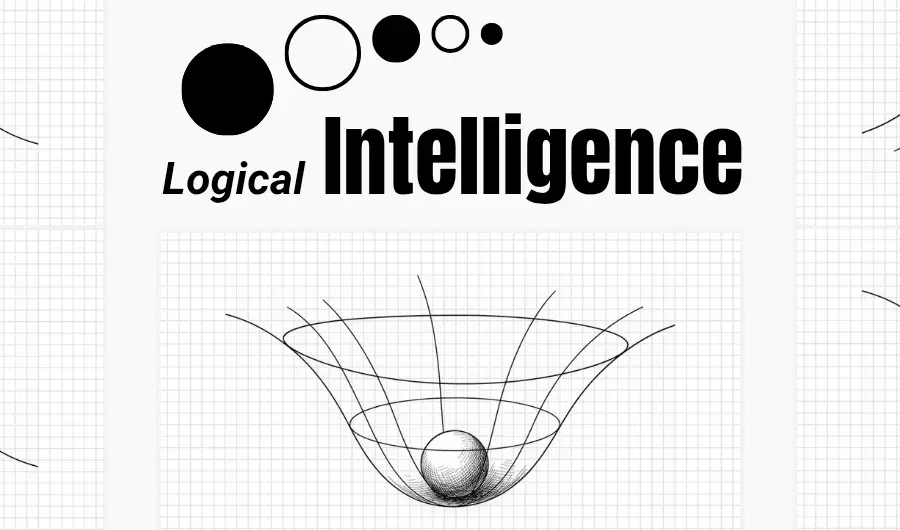
In contrast, Logical Intelligence’s systems, particularly its energy-based models (EBMs), operate by minimizing mathematical “energy” functions subject to constraints and rules. In this framework, valid solutions correspond to configurations that satisfy all constraints and produce the lowest possible energy, a principle borrowed from physics and optimization theory. The result is a reasoning process grounded in formal correctness rather than probabilistic guesswork.
This shift matters profoundly for scenarios where outputs must be demonstrably accurate, such as industrial automation, energy infrastructure, semiconductor verification, and robotics, because the cost of an error can be catastrophic. Logical Intelligence’s models are designed to operate with zero hallucination and mathematical certainty, ensuring that solutions are not only plausible but verifiable.
Energy-Based Models: Principles and Mechanisms
Energy-Based Models (EBMs) are central to Logical Intelligence’s approach. Unlike LLMs, which rely on learning statistical correlations from massive text corpora, EBMs define a search space of possible states and an associated energy function that measures how well a candidate state conforms to constraints. The system then searches for the state with minimal energy, effectively the most logical or correct solution given the predefined rules of the task.
This approach contrasts sharply with probabilistic models: instead of predicting what might be correct, EBMs aim to find what must be correct within a structured formal framework. For example, in a classical reasoning problem like Sudoku, an EBM can define the rules of the puzzle as constraints and then identify solutions that satisfy all constraints, rather than rely on statistical correlations derived from an LLM’s training data.
Because EBMs emphasize mathematically definable correctness, they offer advantages in areas requiring certifiability and auditability, attributes that are critical for systems governing physical machinery, power grids, or regulated infrastructure. The architecture inherently limits deviation from allowed states, which reduces the risk of unpredictable or unexplainable behaviour.
Key Products and Technological Capabilities
Logical Intelligence’s current technological ecosystem centers on several core components, each designed to enable dependable, logic-driven AI solutions:
⦿ Kona 1.0: Reasoning Beyond Language
Kona 1.0 is the company’s flagship energy-based reasoning model. Rather than being a chatbot or generative assistant, Kona is a reasoning engine built to solve complex tasks by mapping permissible states and computing logically consistent solutions that minimize energy according to constraints. Demonstrations have included solving Sudoku puzzles and, in future releases, games such as chess and Go, benchmarks that highlight the model’s reasoning capabilities relative to traditional LLMs.
Kona’s design emphasizes error recognition and correction, a departure from prediction-based methods and a step closer to human-like reasoning. Eve Bodnia has described Kona’s reasoning as “a clear break from narrow AI,” suggesting that it is capable of transferring reasoning skills across domains without retraining for each task.
⦿ Aleph: Formal Verification and Code Assurance
Another significant product is Aleph, an AI agent focused on formal verification and code correctness. Aleph generates mathematically verifiable proofs for software components, ensuring that code behaves as intended and is free from vulnerabilities. This capability is particularly valuable for high-stakes software where traditional testing methods are insufficient to guarantee absolute correctness.
In rigorous benchmarks, including the prestigious Putnam mathematics assessment, Aleph has achieved performance levels that surpass many publicly evaluated language models. Its capacity to produce machine-checkable proofs demonstrates the strength of Logical Intelligence’s underlying mathematical reasoning systems.
⦿ Formal Verification Agents and Audit Tools
Complementing Aleph are additional AI agents (such as the Noa audit agent) that identify vulnerabilities, provide codebase insights, and establish the need for stronger logical guarantees. These tools aim to make software development both safer and more efficient by embedding logical certainty into the engineering pipeline.
Applications Across Critical Industries
Logical Intelligence targets sectors where unverified or probabilistic AI behaviour cannot be tolerated. Because energy-based models and formal reasoning provide mathematically guaranteed correctness, these systems are well suited to applications with stringent safety, reliability, and regulatory requirements.
⦿ Advanced Manufacturing
Factories and automated systems increasingly rely on AI for precision control, predictive maintenance, and coordination. Logical Intelligence’s reasoning models enable systems that not only predict machine behaviour but verify operations within defined safety constraints, preventing errors that could disrupt production or compromise worker safety.
⦿ Energy Infrastructure
Power grids, utilities, and energy management systems require real-time decision logic that is provably correct. Models with mathematically grounded reasoning can optimize energy flows, detect anomalies, and ensure stable operations without resorting to approximations prone to error.
⦿ Robotics and Autonomous Systems
In robotic control systems, deterministic reasoning is essential for safety and predictability. Energy-based models can enforce operational constraints, enabling robots to make decisions that are both efficient and guaranteed to respect physical and logical boundaries.
⦿ Semiconductor and Software Verification
In industries such as chip design and regulated software, verification systems like Aleph can prove that code behaves correctly at a fundamental level. This avoids expensive recalls, security vulnerabilities, and system failures that result from undetected logical flaws.
Theoretical Implications and Future of AI
Logical Intelligence’s approach challenges the prevailing narrative in AI research that large language models alone will lead to artificial general intelligence (AGI). While LLMs are powerful for natural language processing, they lack the capacity for rigorous reasoning across domains without extensive retraining or human oversight.
By combining energy-based reasoning models with other AI modalities, including traditional LLMs and “world models” that learn from interaction data, Logical Intelligence envisions a more holistic path toward AGI. This multidisciplinary integration offers the possibility of machines that not only generate language but also reason, problem-solve, verify, and adapt across diverse tasks without losing logical consistency.
For instance, Bodnia and her collaborators argue that true intelligence must extend beyond language processing to encompass reasoning, physical world navigation, and adaptive learning, a view that broadens the scope of what AGI might ultimately look like.
Challenges and Industry Reception
Despite its potential, Logical Intelligence’s approach also faces challenges. The computational complexity of energy-based reasoning and formal verification remains significant, and industry adoption will depend on balancing performance, scalability, and cost. Ensuring that these models can operate at scale in complex real-world environments is an ongoing engineering challenge.
Nevertheless, the AI community’s interest in alternatives to probabilistic language models has grown, with notable researchers and institutions exploring similar paradigms. Logical Intelligence’s early progress, particularly demonstrated performance on formal benchmarks and deployment readiness for high-stakes sectors, has attracted attention and investment interest. The company has been positioning itself for significant funding rounds, aiming for high valuation and expanded operations.
Ethical Considerations and Responsible AI
Logical Intelligence’s emphasis on correctness, auditability, and constraint-based reasoning aligns with broader concerns about AI safety, transparency, and responsible deployment. By prioritizing verifiable outputs rather than plausible guesses, the company inherently mitigates risks associated with misleading or harmful AI behaviour.
Formal verification and logically guaranteed outcomes also contribute to accountability in systems that affect public safety, infrastructure operations, and critical business decisions. In sectors where errors can cause loss of life, financial ruin, or systemic failure, the ability to demonstrate correctness provides a foundation for trust between humans and machines.
In addition, Logical Intelligence’s rigorous mathematical foundations create a framework for interpretability and explainability, two pillars of ethical AI that remain elusive in many deep learning systems.
Conclusion
Logical Intelligence represents a bold reimagining of what artificial intelligence can and should be. Instead of building ever-larger models that generate increasingly convincing responses, this company champions the idea that true intelligence must be verifiable, logically consistent, and mathematically sound.
By pioneering energy-based reasoning, formal verification systems, and mathematically grounded AI architectures, Logical Intelligence is carving a new path in the landscape of AI innovation. Its work has deep implications for critical industries, safety-conscious deployments, and the overarching quest for broader, more trustworthy artificial intelligence.
In a field saturated with optimism about probabilistic models and language-centric approaches, Logical Intelligence stands out for its commitment to certainty over approximation, a philosophy that could shape the next era of AI development and bring us closer to machines that reason with conviction.
AI Informed Newsletter
Stay informed on the fastest growing technology.
Disclaimer: The content on this page and all pages are for informational purposes only. We use AI to develop and improve our content — we love to use the tools we promote.
Course creators can promote their courses with us and AI apps Founders can get featured mentions on our website, send us an email.
Simplify AI use for the masses, enable anyone to leverage artificial intelligence for problem solving, building products and services that improves lives, creates wealth and advances economies.
A small group of researchers, educators and builders across AI, finance, media, digital assets and general technology.
If we have a shot at making life better, we owe it to ourselves to take it. Artificial intelligence (AI) brings us closer to abundance in health and wealth and we're committed to playing a role in bringing the use of this technology to the masses.
We aim to promote the use of AI as much as we can. In addition to courses, we will publish free prompts, guides and news, with the help of AI in research and content optimization.
We use cookies and other software to monitor and understand our web traffic to provide relevant contents, protection and promotions. To learn how our ad partners use your data, send us an email.
© newvon | all rights reserved | sitemap