

What Is Nvidia? | Everything you need to know
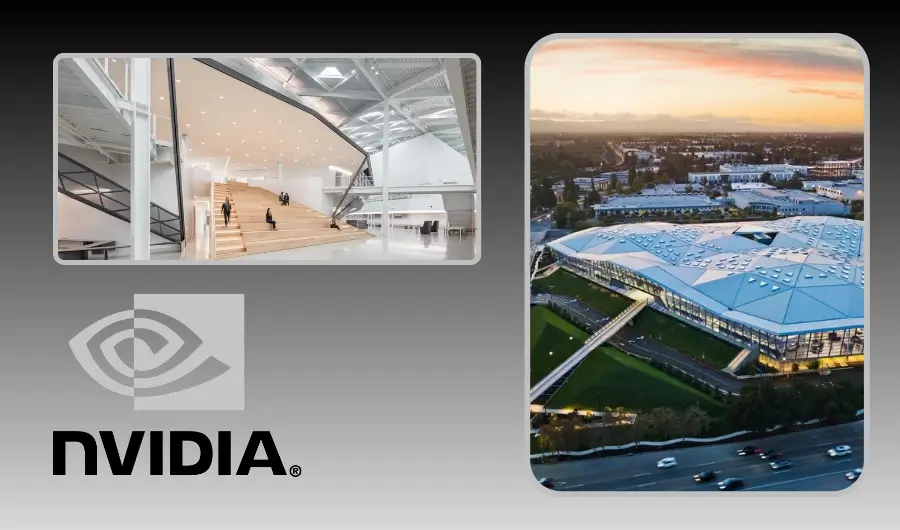
Nvidia Corporation (NVIDIA) is a leading American technology company primarily known for its innovations in graphics processing units (GPUs), artificial intelligence (AI), and high-performance computing.
Founded in 1993, Nvidia has grown from a specialized graphics hardware producer into a globally recognized powerhouse that drives major segments of modern computing, from graphics rendering and gaming to AI research, autonomous vehicles, data centers, and scientific computing.
Nvidia’s impact is both foundational and transformative. Its products and technologies have redefined how computers process graphics, handle parallel workloads, and accelerate machine learning models. Over the decades, Nvidia has become a central player in the evolution of modern computing architectures, particularly through its GPU designs, software ecosystems, and forward-looking research initiatives.
History and Origins of Nvidia
Nvidia was founded in Santa Clara, California in April 1993 by Jensen Huang, Chris Malachowsky, and Curtis Priem. The original mission was to create graphics products that would significantly improve visual computing performance for computer users. At the time, the personal computer revolution was well underway, but mainstream graphics performance had yet to scale in line with expanding demands for 3D gaming, professional visualization, and digital media.
In its early years, Nvidia focused on developing discrete graphics cards — hardware components dedicated to processing visual data. Their breakthrough came in 1999 with the release of the GeForce 256, marketed as the first “Graphics Processing Unit.” This GPU was designed to handle the heavy lifting of complex 3D calculations, offloading that work from the computer’s central processing unit (CPU).
The GeForce 256 and its successors quickly became industry benchmarks, helping Nvidia establish a reputation for performance and innovation.
Throughout the 2000s and 2010s, Nvidia expanded its product lines, refining GPU architectures and building a comprehensive software ecosystem. Its products began to appear not only in gaming PCs but also in professional workstations, servers, and scientific computers. By the mid-2010s, Nvidia’s GPUs were widely adopted for AI and deep learning tasks, a role that would redefine the company’s strategic direction and global influence.
Nvidia’s Core Products and Technologies
At its core, Nvidia is best known for its GPUs, specialized chips designed to accelerate graphics and parallel processing tasks. The company’s GeForce brand dominates the consumer gaming market, offering powerful, high-performance GPUs used in desktops and laptops around the world. These GPUs support advanced rendering techniques, real-time ray tracing (simulated light behavior for realistic visuals), and high frame rates for immersive gaming experiences.
In the professional graphics space, Nvidia’s Quadro (recently rebranded as Nvidia RTX for Workstations) and NVIDIA RTX™ A Series GPUs focus on industries such as media and entertainment, architecture, engineering, and product design. These cards deliver precision, stability, and specialized features for 3D modeling, animation, simulation, and rendering workflows.
GPU Compute for AI and Parallel Processing
Beyond graphics, Nvidia’s GPUs excel at parallel computing — the ability to process many calculations simultaneously. This capability makes them highly effective for AI training and inference, scientific simulations, data analytics, and complex mathematical tasks that would overwhelm traditional CPUs.
Nvidia’s Tesla, A100, and later H100 GPUs (part of the Nvidia data center line) are designed specifically for large-scale computing workloads. These units support thousands of parallel processor cores and advanced memory architectures, enabling unprecedented performance in training deep neural networks and deploying large language models, such as AI systems used in research, enterprise, and cloud services.
Data Center and AI Infrastructure
As AI has become central to technology strategy across industries, Nvidia’s role has shifted from hardware vendor to AI infrastructure provider. Nvidia GPUs are now widely adopted in data centers operated by cloud providers, research institutions, and corporations developing AI systems.
These GPUs power AI training clusters, inference servers, and high-performance computing (HPC) installations.
Nvidia also designs specialized systems like the DGX™ systems, which integrate multiple GPUs and optimized software for AI research and enterprise deployments. With these integrated platforms, Nvidia delivers end-to-end solutions that simplify scaling AI workloads, from experimentation to production.
Nvidia’s Software Ecosystem
Hardware alone does not define Nvidia’s success. A critical differentiator has been its investment in software frameworks and developer tools that unlock the full power of its GPUs.
CUDA and GPU Computing Platform
In 2006, Nvidia introduced CUDA (Compute Unified Device Architecture) — a parallel computing platform and programming model that allows developers to harness GPU compute power easily. CUDA enables software developers to write applications in familiar languages like C, C++, and Python, while transparently offloading computational tasks to the GPU.
This innovation significantly expanded the use of GPUs beyond graphics into scientific computing, machine learning, video encoding and decoding, and real-time data processing.
CUDA has become an industry standard for GPU-accelerated computing, supported by major deep learning frameworks such as TensorFlow and PyTorch. Many research institutions and high-performance computing centers rely on CUDA-based workflows for simulations in physics, climate science, genomics, and more.
Nvidia Software Tools and Libraries
Nvidia maintains a broad portfolio of software tools and libraries designed to simplify GPU programming and optimize performance.
cuDNN is a GPU-accelerated library for deep neural networks that boosts training and inference speed.
TensorRT is a platform for high-performance deep learning inference.
Nsight provides developer tools for debugging and profiling GPU applications.
Omniverse is a collaborative 3D design and simulation platform that enables real-time interaction across digital assets and workflows.
NVIDIA AI Enterprise is a suite of AI and data science software optimized for enterprise deployments.
Together, these tools create an ecosystem that allows developers, researchers, and organizations to build, optimize, and scale GPU-accelerated applications across industries.
Nvidia in AI and Machine Learning
One of the most significant developments in recent computing history is the rapid rise of artificial intelligence, particularly deep learning. Nvidia GPUs are uniquely suited to AI workloads because they can perform massive amounts of matrix and vector operations — tasks fundamental to training neural networks.
As AI models grew larger and more complex, traditional CPUs struggled to provide sufficient performance. Nvidia’s GPUs, with their thousands of parallel cores and high memory bandwidth, became the de facto standard for AI computation. From natural language processing to computer vision and autonomous systems, GPUs accelerate the algorithms that underpin modern AI.
Nvidia continues to innovate in this space with dedicated hardware and software. The development of tensor cores, which are specialized units within Nvidia GPUs optimized for AI matrix mathematics, has accelerated deep learning performance further. These advances enable enterprises and researchers to train generative AI models and deploy real-time inference services at scale.
Nvidia in Autonomous Vehicles and Robotics
Nvidia’s influence extends beyond traditional computing environments into emerging technologies like autonomous vehicles and robotics.
The company’s Nvidia DRIVE™ platform provides a suite of hardware, software, and simulation tools designed to support self-driving cars and advanced driver assistance systems (ADAS).
The DRIVE platform integrates AI compute, sensor processing, and safety-certified software to help automotive manufacturers develop autonomous capabilities. By combining high-performance GPUs, deep learning inference engines, and simulation environments, Nvidia empowers developers to train and validate autonomous driving models using real-world and synthetic data.
In robotics, Nvidia Jetson modules provide compact, energy-efficient AI computing solutions for drones, industrial robots, and edge AI devices. These systems bring real-time AI processing to machines operating outside traditional data center infrastructure.
Nvidia Market Position and Business Strategy
Nvidia’s business strategy has evolved significantly over the decades. While the company’s roots are in consumer graphics hardware, its current market position is diversified across multiple high-growth segments.
Gaming GPUs continue to meet demand for high-performance graphics in PCs and laptops.
Professional visualization GPUs support creative professionals and design workflows.
Data center GPUs represent a rapidly growing segment driven by AI and enterprise computing.
Automotive solutions focus on AI and compute platforms for autonomous systems.
AI software and platforms include developer tools, AI stacks, and enterprise-grade frameworks.
This diversified approach helps Nvidia mitigate risks associated with any single market while capitalizing on broader trends in AI, cloud computing, and advanced graphics.
Nvidia Competitive Landscape
Nvidia operates in highly competitive markets. In the GPU space, its primary competitors include AMD (Advanced Micro Devices) and, to a lesser extent, Intel, both of which develop graphics and compute products.
AMD’s Radeon GPUs compete directly with Nvidia’s GeForce lineup in gaming and professional markets, while Intel is expanding its presence through its own GPU architectures.
In AI and data center acceleration, Nvidia faces growing competition from companies developing specialized AI chips, including Google (TPU), Amazon (Inferentia and Trainium), Apple (M-series silicon), as well as startups focused on custom AI accelerators. These competitors aim to optimize performance, power efficiency, and cost for AI workloads, challenging Nvidia’s dominance.
However, Nvidia’s ecosystem, particularly CUDA and its software platforms, remains a significant competitive advantage. The breadth of tools, developer adoption, and the extensive base of GPU-accelerated applications strengthen Nvidia’s position in both hardware and software markets.
Key Technologies That Define Nvidia
Several technologies distinguish Nvidia’s products and contribute to its long-term value.
Parallel processing architectures with thousands of processing cores enable high throughput for graphics and compute tasks.
Ray tracing and AI-driven rendering deliver unprecedented visual fidelity in gaming and professional visualization.
Tensor cores provide hardware optimized for AI matrix operations critical for training and inference performance.
High-bandwidth memory (HBM) maximizes data flow and performance for intensive workloads.
These innovations extend across Nvidia’s product stack, ensuring relevance in gaming, professional graphics, scientific research, and AI infrastructure.
Nvidia Use Cases Across Industries
Nvidia’s technologies have been adopted in a variety of industries, each leveraging GPU acceleration to achieve specific goals.
⦿ Nvidia in Entertainment and Gaming
Nvidia GPUs power high-end gaming experiences, enabling ultra-realistic graphics, fast frame rates, and advanced visual effects. Game developers optimize titles to take advantage of Nvidia’s features, and gamers rely on GeForce hardware for competitive and immersive gameplay.
⦿ Nvidia in Media and Film Production
Content creators use Nvidia GPUs for 3D modeling, animation, video editing, and special effects. Tools powered by GPU acceleration significantly reduce rendering times and enable real-time previews that streamline creative workflows.
⦿ Nvidia in Scientific Research and HPC
Supercomputers equipped with Nvidia GPUs accelerate simulations in physics, climate modeling, genomics, quantum research, and more. These systems enable researchers to analyze complex data sets and run high-resolution simulations that were previously impractical.
⦿ Nvidia in Healthcare and Life Sciences
AI models powered by Nvidia GPUs support medical imaging, drug discovery research, genomics analysis, and predictive healthcare applications. By accelerating data-intensive tasks, GPUs contribute to faster discoveries and improved diagnostic capabilities.
⦿ Nvidia in Automotive and Transportation
From autonomous driving to advanced driver assistance systems, Nvidia’s automotive platforms provide compute and AI capabilities that support next-generation transportation solutions.
Nvidia Future Directions and Innovation
Looking ahead, Nvidia looks to push the boundaries of computing performance and AI capabilities.
The company invests heavily in research and development to expand GPU architectures and create purpose-built solutions for emerging workloads. The evolution of AI models, edge computing, and real-time simulation will likely shape Nvidia’s future product roadmaps and strategic investments.
Areas of long-term focus include expanded capabilities for generative AI, energy-efficient computing at the edge, deeper integration across cloud ecosystems, and collaborative platforms for enterprise digital transformation.
Conclusion: Nvidia Global Impact
Nvidia is far more than a GPU manufacturer. It is a transformative technology company that has reshaped multiple domains of modern computing, from visual graphics and gaming to AI, autonomous systems, and scientific innovation. Through a combination of cutting-edge hardware, robust software ecosystems, and strategic vision, Nvidia has become a cornerstone of contemporary and future computing infrastructure.
Understanding Nvidia’s role helps contextualize broader trends in technology, particularly the shift toward AI-driven innovation and high-performance compute architectures. As industries continue to adopt advanced computing technologies, Nvidia’s influence will remain central to the evolution of digital systems worldwide.
AI Informed Newsletter
Stay informed on the fastest growing technology.
Disclaimer: The content on this page and all pages are for informational purposes only. We use AI to develop and improve our content — we love to use the tools we promote.
Course creators can promote their courses with us and AI apps Founders can get featured mentions on our website, send us an email.
Simplify AI use for the masses, enable anyone to leverage artificial intelligence for problem solving, building products and services that improves lives, creates wealth and advances economies.
A small group of researchers, educators and builders across AI, finance, media, digital assets and general technology.
If we have a shot at making life better, we owe it to ourselves to take it. Artificial intelligence (AI) brings us closer to abundance in health and wealth and we're committed to playing a role in bringing the use of this technology to the masses.
We aim to promote the use of AI as much as we can. In addition to courses, we will publish free prompts, guides and news, with the help of AI in research and content optimization.
We use cookies and other software to monitor and understand our web traffic to provide relevant contents, protection and promotions. To learn how our ad partners use your data, send us an email.
© newvon | all rights reserved | sitemap