

OpenAI Considers Backing AI Drug Discovery Startups | News
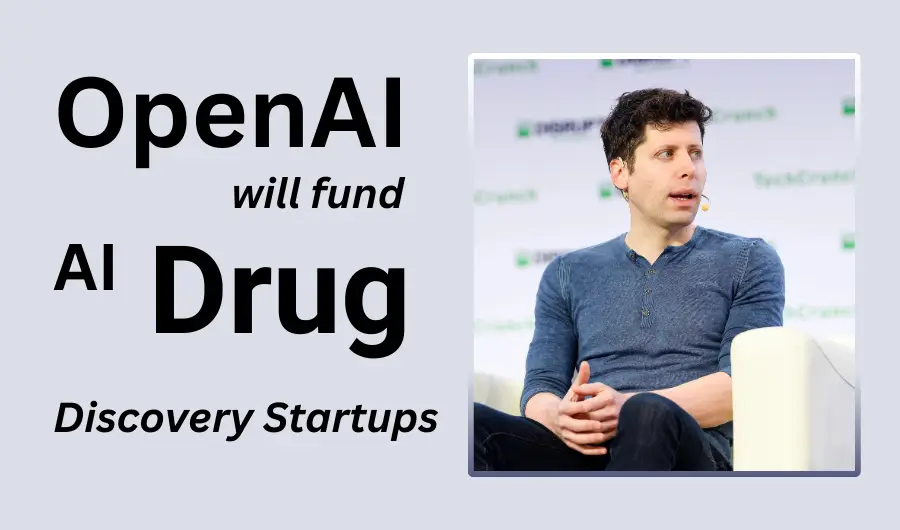
OpenAI is evaluating direct investment in biotechnology and pharmaceutical startups that apply artificial intelligence to drug discovery, CEO Sam Altman stated, signaling a potential strategic expansion of the company’s involvement in life sciences research. The initiative, reported on Feb. 3, 2026, reflects OpenAI’s interest in supporting AI-led innovation in drug design and development, with discussions including potential revenue-sharing arrangements tied to future commercialization.
OpenAI’s Strategic Interest in Biotech Investment
According to a Bloomberg report, Sam Altman confirmed that OpenAI is considering backing startups focused on employing artificial intelligence to discover novel drugs and therapies, though he emphasized the exploratory nature of these discussions and did not announce specific commitments or funding details. Under the contemplated approach, OpenAI could obtain royalties from revenue generated by successful AI-driven discoveries at partner firms.
Altman’s remarks came amid broader industry interest in generative AI applications extending beyond traditional language and software use cases into scientific research, including computational biology and molecular design. Drug discovery is historically resource-intensive and time-consuming, and AI systems are increasingly seen by investors and developers as tools to accelerate hypothesis generation, target identification, and molecule optimization.
Context Within AI and Biotech Funding Landscape
OpenAI’s potential investments align with recent capital flows into AI-enabled biotech ventures. For example, Chai Discovery, a startup that employs AI models for antibody and molecule design, recently completed a $130 million Series B funding round, valuing the company at approximately $1.3 billion, with participation from investors including Oak HC/FT, General Catalyst, Thrive Capital, Menlo Ventures, and OpenAI. The financing brought Chai’s total funds raised to about $225 million since its founding in 2024.
Chai’s proprietary model, Chai-2, has been reported to design full-length monoclonal antibodies and deliver results against traditionally challenging targets in internal studies, with designed candidates meeting preclinical selection standards across multiple antigen types. Investors and company executives have framed this development as part of a shift toward more programmable, computational approaches in early-stage drug discovery.
The AI-biotech investment trend has broader momentum as firms and venture capitalists target technologies that integrate machine learning with chemical and biological research workflows. This includes a growing number of startups pursuing generative modeling for molecular design, predictive analytics for biological systems, and automation of previously manual research tasks. Industry analyses project expanded use of AI tools in pharmaceutical research and development, reflecting interest from both established drug companies and new venture-backed entrants.
Industry and Scientific Partnerships Involving OpenAI
OpenAI’s expanding role in life sciences is not limited to potential direct investments in drug discovery startups. The company has pursued collaborations and provided AI tools across healthcare sectors, including partnerships with pharmaceutical companies and clinical research organizations to embed advanced AI models into workflows aimed at accelerating therapeutic development and operational decision-making. For instance, Thermo Fisher Scientific announced a partnership with OpenAI to integrate AI capabilities into clinical trial and drug development processes with goals of improving efficiency and cycle times.
Historical collaborations also include ventures to test AI-generated personalized care plans and other healthcare applications, highlighting OpenAI’s broader interest in the intersection between AI and biomedicine.
Regulatory and Scientific Considerations Acknowledged
Industry observers note that drug discovery and development are subject to rigorous scientific validation and regulatory review, requirements that shape how computational models and AI systems are adopted in real-world research and development environments. Altman highlighted that this context informs OpenAI’s exploratory posture as it engages with potential partners and assesses long-term involvement in biotech investment.
Funding Models and Commercial Structures
Reports indicate that OpenAI is evaluating financial arrangements that extend beyond traditional subscriptions and licensing, possibly incorporating outcome-based or revenue-sharing terms tied to commercial success stemming from AI applications. This approach could link OpenAI’s financial outcomes to advances achieved by AI-enabled biotech ventures that benefit from its technology or investment.
Emerging Cross-Sector Dynamics
OpenAI’s reconsideration of strategic priorities to include direct support for AI drug discovery firms reflects wider shifts in technology and life sciences investment, where computational tools are increasingly viewed as integral to future innovation cycles. The company’s exploration of this area occurs against a backdrop of growing capital deployment in AI biotech and heightened scientific interest in computational solutions to complex biological challenges.
AI Informed Newsletter
Stay informed on the fastest growing technology.
Disclaimer: The content on this page and all pages are for informational purposes only. We use AI to develop and improve our content — we love to use the tools we promote.
Course creators can promote their courses with us and AI apps Founders can get featured mentions on our website, send us an email.
Simplify AI use for the masses, enable anyone to leverage artificial intelligence for problem solving, building products and services that improves lives, creates wealth and advances economies.
A small group of researchers, educators and builders across AI, finance, media, digital assets and general technology.
If we have a shot at making life better, we owe it to ourselves to take it. Artificial intelligence (AI) brings us closer to abundance in health and wealth and we're committed to playing a role in bringing the use of this technology to the masses.
We aim to promote the use of AI as much as we can. In addition to courses, we will publish free prompts, guides and news, with the help of AI in research and content optimization.
We use cookies and other software to monitor and understand our web traffic to provide relevant contents, protection and promotions. To learn how our ad partners use your data, send us an email.
© newvon | all rights reserved | sitemap