

OpenAI Launches Standalone Codex App for macOS | News
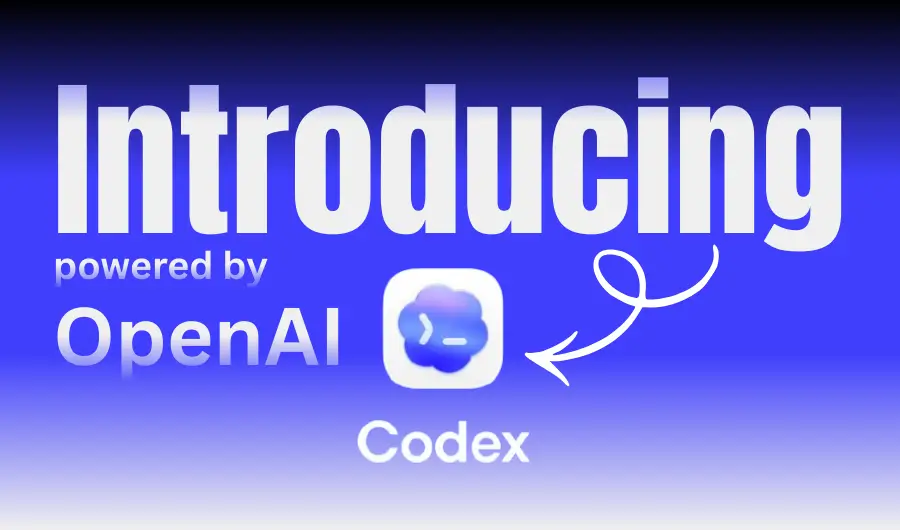
OpenAI on February 2, 2026 publicly released a standalone Codex app for the macOS platform, extending its artificial intelligence–powered coding assistant with a dedicated desktop interface and reporting that overall usage has approximately doubled in recent months following the deployment of its latest Codex model.
OpenAI said the new macOS Codex app is designed as a centralized environment for managing multiple AI coding agents that can operate in parallel on large or long‑running tasks, and is available immediately to users across various ChatGPT subscription tiers, with expanded access and increased usage limits as part of the launch offering.
OpenAI’s announcement characterized the Codex app as a command center for orchestrating and supervising multiple AI agents, each capable of executing discrete parts of software development workflows concurrently. According to the company, this builds on a shift in developer workflows toward multi‑agent and agent‑based coding assistance, where models are entrusted with extended tasks that span design, building, testing, and maintenance phases.
The desktop app is positioned to provide developers with a unified interface that includes features such as project‑organised threads for agent tasks, support for worktrees that isolate concurrent agent activity on the same codebase without conflicts, as well as review and inspection tools that allow developers to assess and adjust agent‑generated changes. In addition to running agents in parallel, the interface incorporates controls for commenting on differences in code and integrating changes with external editors.
OpenAI stated that the app’s design reflects an evolution in how professionals engage with AI in software development, seeking to direct and coordinate agent capabilities at scale rather than relying solely on single‑agent interactions. The app inherits configuration and session history from the Codex command‑line interface and integrated development environment extensions, facilitating continuity for existing Codex users.
In conjunction with the macOS launch, OpenAI made changes to usage limits and access: for a limited period, Codex access was extended to ChatGPT Free and Go users, while subscribers on paid tiers including Plus, Pro, Business, Enterprise, and Education received doubled rate limits across all Codex usage modalities, such as in the app, in the CLI, in IDE integrations, and via cloud interfaces. OpenAI said users can also purchase additional usage credits if required.
OpenAI reported that since the mid‑December 2025 launch of the GPT‑5.2‑Codex model, overall usage of Codex services has doubled, with more than a million developers using the technology over the past month. The company did not disclose specific usage figures beyond this growth statement.
According to industry reporting, the macOS app is part of OpenAI’s larger effort to strengthen its position in the competitive AI code‑generation market, which includes products from other providers such as Anthropic’s Claude Code tools that have seen rapid adoption. The desktop release is intended to broaden accessibility and streamline workflows for professional and individual developers alike.
OpenAI’s official product documentation describes built‑in sandboxing and security design within the Codex app that limits agent permissions by default, only escalating privileges such as network access with user authorisation, and provides configuration options for team‑specific rules. The company also outlined future plans including broadening platform support, such as adding versions for Windows systems, and extending background and cloud‑based automation capabilities.
The introduction of a standalone desktop application represents a notable step in the evolution of AI‑assisted software development tools, moving beyond browser‑based interfaces to fully featured, multitasking environments aimed at supporting professional development workflows.
AI Informed Newsletter
Stay informed on the fastest growing technology.
Disclaimer: The content on this page and all pages are for informational purposes only. We use AI to develop and improve our content — we love to use the tools we promote.
Course creators can promote their courses with us and AI apps Founders can get featured mentions on our website, send us an email.
Simplify AI use for the masses, enable anyone to leverage artificial intelligence for problem solving, building products and services that improves lives, creates wealth and advances economies.
A small group of researchers, educators and builders across AI, finance, media, digital assets and general technology.
If we have a shot at making life better, we owe it to ourselves to take it. Artificial intelligence (AI) brings us closer to abundance in health and wealth and we're committed to playing a role in bringing the use of this technology to the masses.
We aim to promote the use of AI as much as we can. In addition to courses, we will publish free prompts, guides and news, with the help of AI in research and content optimization.
We use cookies and other software to monitor and understand our web traffic to provide relevant contents, protection and promotions. To learn how our ad partners use your data, send us an email.
© newvon | all rights reserved | sitemap