

OpenAI Researcher Resigns Over ChatGPT Advertising Test
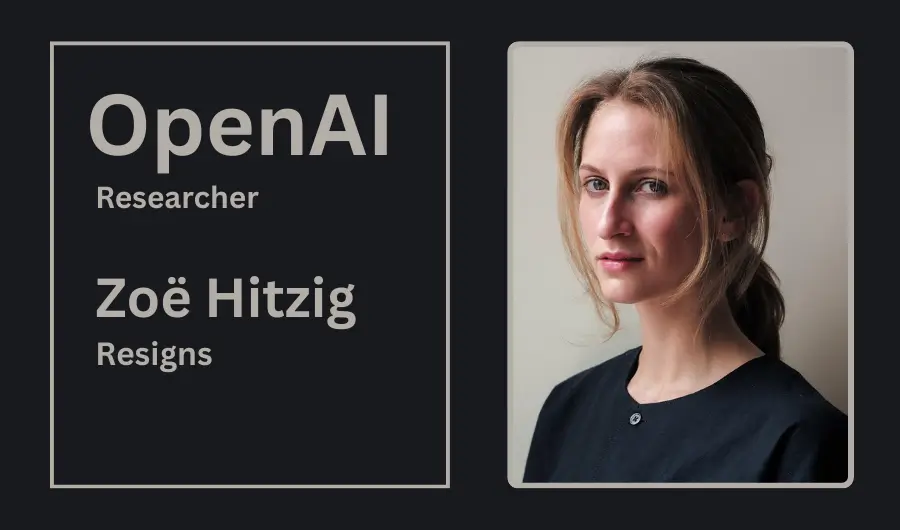
OpenAI, the artificial intelligence research company behind ChatGPT, faced public scrutiny this week as a senior researcher, Zoë Hitzig, resigned and published a New York Times opinion piece linking her departure directly to the company’s launch of advertising tests within its chatbot platform.
Hitzig warned that the initiative could expose deeply personal user interactions to commercial pressures without binding oversight, raising questions about privacy, user trust, and the long-term implications of monetizing conversational AI.
Researcher Departure Tied to ChatGPT Advertising Pilot
Zoë Hitzig, a researcher who spent two years at OpenAI contributing to how artificial intelligence models were developed, priced, and safety policies were shaped, announced her resignation from the company, effective Monday, coinciding with the beginning of ChatGPT’s advertising test in the United States. In her published op-ed, Hitzig stated she left OpenAI because the company “seems to have stopped asking the questions I’d joined to help answer,” linking her departure to the newly introduced advertisements that appear beneath ChatGPT responses for users on the free and low-tier subscription plans.
Hitzig’s piece, titled “OpenAI Is Making the Mistakes Facebook Made. I Quit,” outlines her concern that advertising built on the conversational history of users, which she described as an unprecedented archive of intimate human disclosures, could ultimately lead to exploitation or manipulation beyond what current safeguards can prevent. She emphasized that while OpenAI maintains ads will be clearly labeled and will not influence ChatGPT’s answers, the underlying incentive structure for revenue generation might create pressures that erode those boundaries over time.
OpenAI’s public documentation for the advertising pilot states that the test is designed to support continued access to free and affordable tiers while preserving answer independence and user data privacy, asserting that advertisers will not receive individual chat content and that sensitive topics, such as health, mental health, and politics, will be excluded from ad placement. Users can also manage ad personalization settings, according to the company’s posted guidelines.
Privacy and Commercialization Concerns Raised
Hitzig’s public warning highlights broader ethical and privacy concerns surrounding AI systems that have accumulated extensive conversational data over years of widespread use. She argued that many users have shared personal and often sensitive concerns with ChatGPT, believing they were engaging with a tool without a commercial agenda. Her critique emphasizes the tension between monetizing advanced AI through advertising and maintaining a neutral, privacy-respecting environment for users who rely on these systems for a range of tasks, from learning to emotional support.
In her op-ed, Hitzig stressed that while OpenAI’s current advertising model prohibits sharing conversation content with advertisers, the company’s shift toward an ad-supported revenue model could create structural incentives to override its own principles as commercial pressures grow. She cited examples from past technology platforms where privacy commitments eroded in the face of ad revenue demands, urging consideration of alternative approaches such as independent oversight mechanisms, user data cooperatives, or cross-subsidization models that protect privacy without exclusive reliance on advertising.
Industry reactions have been mixed, with discussions ongoing about how best to balance broad access to powerful AI tools with safeguarding user trust and privacy. Some experts and commentators have noted that the integration of ads into platforms deeply entwined with personal data requires clear, enforceable protections to ensure ethical practices do not diminish as companies scale their commercial efforts.
Company Position and Broader Debate
OpenAI has publicly defended its advertising pilot as a step toward sustainable access for a large and diverse user base, contending that ads will remain separate from the core AI experience and that users’ conversational privacy remains intact. The company’s stated approach permits users to dismiss ads, control personalization, and opt out where available, reflecting an emphasis on choice and control within the test parameters.
The episode has amplified debate within the broader AI community about how commercial strategies intersect with ethical considerations in artificial intelligence. Proponents of the advertising initiative argue monetization can support continued innovation and equitable access, while critics warn that even well-intentioned commercial models may introduce risks if not paired with robust, enforceable governance.
Hitzig’s departure and her published concerns signal a developing moment in the industry’s evolution, as companies like OpenAI navigate the complex interplay between expanding reach, generating revenue, and maintaining core commitments to user privacy and ethical AI deployment.
AI Informed Newsletter
Stay informed on the fastest growing technology.
Disclaimer: The content on this page and all pages are for informational purposes only. We use AI to develop and improve our content — we love to use the tools we promote.
Course creators can promote their courses with us and AI apps Founders can get featured mentions on our website, send us an email.
Simplify AI use for the masses, enable anyone to leverage artificial intelligence for problem solving, building products and services that improves lives, creates wealth and advances economies.
A small group of researchers, educators and builders across AI, finance, media, digital assets and general technology.
If we have a shot at making life better, we owe it to ourselves to take it. Artificial intelligence (AI) brings us closer to abundance in health and wealth and we're committed to playing a role in bringing the use of this technology to the masses.
We aim to promote the use of AI as much as we can. In addition to courses, we will publish free prompts, guides and news, with the help of AI in research and content optimization.
We use cookies and other software to monitor and understand our web traffic to provide relevant contents, protection and promotions. To learn how our ad partners use your data, send us an email.
© newvon | all rights reserved | sitemap