

OpenAI Weighs Revenue Share From AI-Driven Discoveries | News
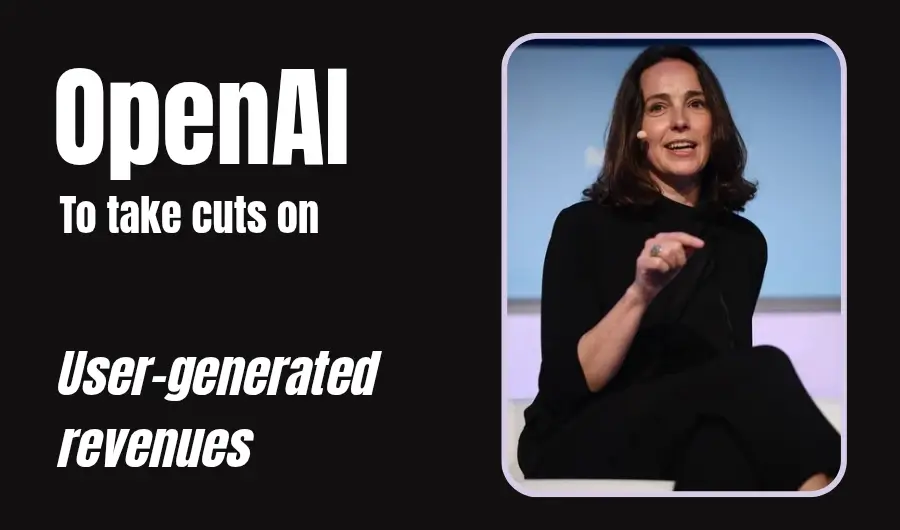
OpenAI, the artificial intelligence leader behind ChatGPT, is considering a major shift in its commercial strategy that would see the company taking a share of the economic value generated by customers using its AI tools for research and development outcomes.
The proposal, outlined by OpenAI’s chief financial officer at the World Economic Forum in Davos, introduces “value sharing” arrangements that could see the firm accept royalty-style or profit-share compensation tied to discoveries its technology helps produce. This marks a departure from traditional software licensing and subscription pricing toward an outcomes-based revenue model.
The discussions, first reported by The Information’s Applied AI newsletter, suggest that OpenAI is exploring agreements in which it would take a percentage of future gains, for example from new drugs or materials discovered using its large-scale models, in exchange for technology and support. This approach aims to align OpenAI’s financial success with the commercial success of its corporate customers while unlocking new streams of revenue beyond subscription and usage fees.
Value-Share Model Targets High-Value R&D
At a panel in Davos moderated by The Information’s CEO, OpenAI CFO Sarah Friar highlighted sectors where AI can have direct value impact, such as pharmaceuticals.
Under the proposed arrangements, OpenAI could take a licence stake or a percentage of profits from a drug or innovation developed with its technology. While specific mechanisms were not detailed, the comments signal that OpenAI may push beyond one-off fees toward capturing long-term value from breakthrough outcomes.
OpenAI’s pivot to outcome-based pricing reflects the challenges of monetising advanced AI in industries where results take years to materialise. Drug discovery, materials science, energy optimisation, and financial services are all areas where AI tools are increasingly used to accelerate complex research processes. Firms in these sectors already apply generative AI to analyse large datasets, test hypotheses, and propose novel solutions, and OpenAI’s more sophisticated models could further embed the company in these workflows.
Commercial and Industry Context
The potential value-sharing model comes as AI companies face mounting pressure to diversify revenue streams. OpenAI has already introduced advertising within its chatbot, ChatGPT and continues to sell API usage and subscription tiers. The exploration of revenue sharing adds to these efforts, positioning the company to benefit directly from successful outcomes its AI helps achieve.
OpenAI is not alone in eyeing such arrangements. Competitors across the industry, including Anthropic, Google DeepMind, and Isomorphic Labs — Alphabet’s AI research division focused on drug discovery — are also engaging with life sciences and biotech firms on data licensing and collaborative R&D.
These talks suggest a broader industry shift toward generative AI playing a central role in innovation pipelines.
Enterprise Considerations and Market Reactions
While the concept of value sharing may open new opportunities for both AI providers and enterprise partners, it also raises practical and contractual challenges. Large enterprises are sophisticated consumers of AI and existing research tools, and many already operate internal AI teams or use specialised suppliers for R&D work. Any revenue-share model would require clear contractual terms governing ownership, rights to intellectual property, and the valuation of AI-assisted contributions.
Early reactions from industry observers reflect a mix of interest and concern. Enterprises may weigh the benefits of shared outcome arrangements against risks of giving up a portion of future profits. Negotiated deals would likely be bespoke and limited to high-value projects where the financial upside justifies deeper collaboration and investment.
Aligning Incentives with Customer Success
OpenAI’s potential move toward revenue sharing aligns its incentives with customer success. Traditional licensing and subscription models decouple vendor compensation from long-term customer outcomes. An outcome-based model, by contrast, would remunerate OpenAI when its technology materially contributes to revenue-generating discoveries. This has appeal in sectors like pharmaceuticals, where a single successful drug can generate billions in sales.
However, detailed terms and implementation remain unsettled. For now, discussions appear exploratory, with OpenAI signalling interest rather than unveiling fixed policy. The company has not publicly released formal documentation on revenue-share agreements, and it is unclear how broadly such a model would apply across its customer base.
The Broader AI Monetisation Landscape
OpenAI’s exploration of value-sharing aligns with wider shifts in the AI industry as vendors seek sustainable business models amid rising infrastructure costs. Large language models require significant compute resources, and companies are under pressure to balance innovation investment with profitable growth. By tying compensation to success metrics, AI providers can better justify premium pricing and participation in high-stakes research endeavours.
Industry analysts note that such models are common in other technology sectors where the vendor contributes significant intellectual capital or bespoke engineering support. For example, performance-based contracts in enterprise software and consulting often tie compensation to measurable business outcomes. OpenAI’s approach may represent an adaptation of these traditional practices to the AI era.
Prospects and Future Developments
As AI continues reshaping R&D across industries, new commercial models are likely to emerge. OpenAI’s willingness to consider revenue sharing with customers reflects both the demand for deeper integrations between AI and enterprise innovation and the need for AI companies to capture value beyond conventional pricing. How these models evolve will influence AI adoption and investment patterns in sectors where breakthroughs can unlock significant economic value.
Further announcements from OpenAI on formalising value-sharing agreements, including specific sectors, pricing terms, and contractual frameworks, are expected as discussions progress.
The commercialisation strategies adopted by OpenAI in the coming months could set precedents for how AI vendors and customers structure partnerships around innovation and discovery outcomes.
AI Informed Newsletter
Stay informed on the fastest growing technology.
Disclaimer: The content on this page and all pages are for informational purposes only. We use AI to develop and improve our content — we love to use the tools we promote.
Course creators can promote their courses with us and AI apps Founders can get featured mentions on our website, send us an email.
Simplify AI use for the masses, enable anyone to leverage artificial intelligence for problem solving, building products and services that improves lives, creates wealth and advances economies.
A small group of researchers, educators and builders across AI, finance, media, digital assets and general technology.
If we have a shot at making life better, we owe it to ourselves to take it. Artificial intelligence (AI) brings us closer to abundance in health and wealth and we're committed to playing a role in bringing the use of this technology to the masses.
We aim to promote the use of AI as much as we can. In addition to courses, we will publish free prompts, guides and news, with the help of AI in research and content optimization.
We use cookies and other software to monitor and understand our web traffic to provide relevant contents, protection and promotions. To learn how our ad partners use your data, send us an email.
© newvon | all rights reserved | sitemap