

OpenClaw Creator Joins OpenAI, Project Moves to Foundation
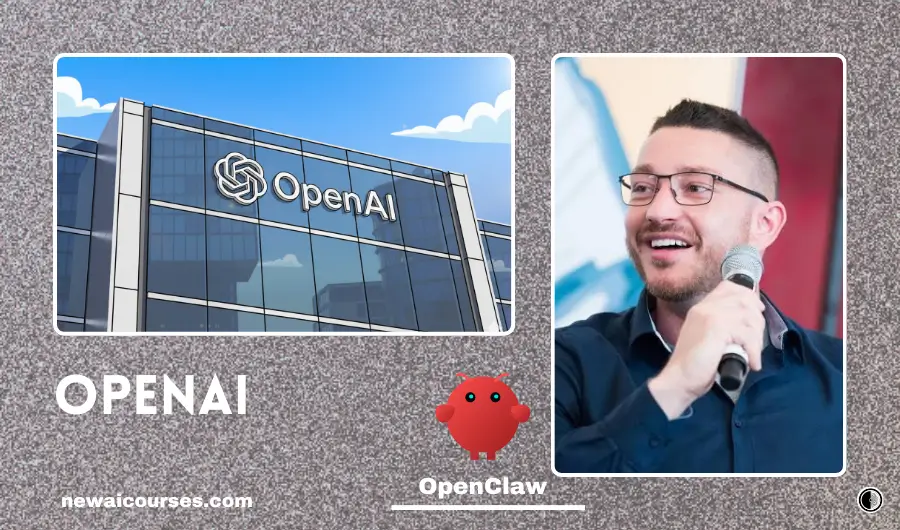
Peter Steinberger, the developer of the widely discussed open-source AI assistant OpenClaw, has joined OpenAI, and the AI agent project will transition into an independent foundation supported by OpenAI leadership, according to official statements. The move, announced in mid-February positions Steinberger to lead development on next-generation personal AI agents while ensuring OpenClaw remains open source under its new structure.
Transition of OpenClaw and Leadership Change
Peter Steinberger, a software engineer and founder of the open-source autonomous agent OpenClaw, is now formally joining OpenAI to work on advanced personal AI assistants and agent technologies. In public communications, Sam Altman, CEO of OpenAI, confirmed on the social platform X that Steinberger will “drive the next generation of personal agents” in his new role at the company, though specific titles or organizational placement were not disclosed. Altman also stated that OpenClaw will continue to exist as an open-source project under the governance of a newly established foundation, with OpenAI committing ongoing support for the initiative.
OpenClaw has drawn substantial attention since its launch in November 2025 under the original name Clawdbot and later Moltbot before assuming its current identity. The project gained rapid adoption across the developer community, leading to the creation and explosion of Moltbook and growth on platforms like GitHub, where it amassed significant engagement and stars, signaling an enthusiastic user base. The foundation structure aims to maintain OpenClaw’s open-source licensing and community access, a condition Steinberger emphasized as central to any partnership discussions with major AI firms.
OpenClaw’s Capabilities and Community Impact
OpenClaw is designed as an autonomous AI assistant capable of performing digital tasks with minimal human intervention, including managing email, coordinating schedules, booking services such as flights and reservations, and operating across messaging platforms such as WhatsApp, Telegram, Slack and others. The software interacts with large language models to execute actions that extend beyond static conversational responses, representing a category of AI known as task-oriented agents. Its open-source status has enabled developers to extend functionality and integrate the agent with local systems and applications.
The project’s explosive growth has been noted both for its utility and for associated challenges. GitHub statistics show high star counts and developer interest, while security researchers have raised concerns about potential misuse or configuration risks when deployed broadly. In addition, name changes early in OpenClaw’s history were driven by trademark disputes, reflecting the pressures faced by rapidly scaling open-source initiatives in AI.
The foundation’s establishment could serve to formalize OpenClaw’s governance and protect its open-source mission. Under the foundation model, community contributors and stakeholders are expected to have clearer mechanisms for ongoing input and oversight, even as OpenAI offers technical and infrastructural support. Steinberger has consistently framed the transition as a way to preserve accessibility and continuity for developers and users who rely on the platform.
Industry and Regulatory Context
OpenClaw’s rise has not occurred in isolation from broader industry dynamics and regulatory scrutiny. Reports indicate that various global authorities, including China’s industry ministry, issued cautions about the AI agent’s capacity to create cybersecurity concerns if improperly managed. These warnings highlight an emerging conversation about the governance and safety of open-source autonomous AI systems that operate with high levels of autonomy and integration with personal data.
The decision by Steinberger to join a leading AI research organization rather than pursue OpenClaw as a standalone commercial entity reflects both the project’s technical promise and the competitive landscape for talent in artificial intelligence. Industry analysts note that major firms, including Meta, reportedly engaged with Steinberger prior to his decision, though his acceptance of OpenAI’s offer was aligned with his goal of keeping the project open and community-driven.
Steinberger’s Vision and Future Role
Steinberger, an Austrian technologist with a background in software entrepreneurship, articulated in blog posts that his motivation for joining OpenAI centers on scaling what he sees as transformative technology in a responsible, open framework. He has emphasized that broader access to cutting-edge models and research resources through OpenAI is essential to realizing his vision of approachable, capable personal AI agents that can benefit users at scale. The commitment to open-source stewardship through a foundation demonstrates his stated priority of community access over proprietary control.
In public statements, Altman echoed the importance of agent technologies to OpenAI’s future roadmap, suggesting that multi-agent, task-oriented capabilities will increasingly be integrated into the company’s product offerings. While technical specifics and rollout plans were not detailed in the announcement, the alignment suggests a strategic emphasis on autonomous AI functions beyond traditional conversational models.
OpenClaw’s Position in the Open-Source AI Ecosystem
As OpenClaw transitions into a foundation and continues its development with OpenAI’s backing, it stands among a small but growing set of open-source frameworks focused on autonomous AI actions.
Its integration into broader agent ecosystems and ongoing support from a major AI lab may influence the pace and direction of related innovations, particularly for developers seeking open, extensible alternatives to closed commercial systems. The project’s evolution will likely serve as a reference point for discussions about open-source governance, safety, and community contributions in advanced AI software tools.
AI Informed Newsletter
Stay informed on the fastest growing technology.
Disclaimer: The content on this page and all pages are for informational purposes only. We use AI to develop and improve our content — we love to use the tools we promote.
Course creators can promote their courses with us and AI apps Founders can get featured mentions on our website, send us an email.
Simplify AI use for the masses, enable anyone to leverage artificial intelligence for problem solving, building products and services that improves lives, creates wealth and advances economies.
A small group of researchers, educators and builders across AI, finance, media, digital assets and general technology.
If we have a shot at making life better, we owe it to ourselves to take it. Artificial intelligence (AI) brings us closer to abundance in health and wealth and we're committed to playing a role in bringing the use of this technology to the masses.
We aim to promote the use of AI as much as we can. In addition to courses, we will publish free prompts, guides and news, with the help of AI in research and content optimization.
We use cookies and other software to monitor and understand our web traffic to provide relevant contents, protection and promotions. To learn how our ad partners use your data, send us an email.
© newvon | all rights reserved | sitemap