

7 Practical Ways to Make Money as an AI Creator
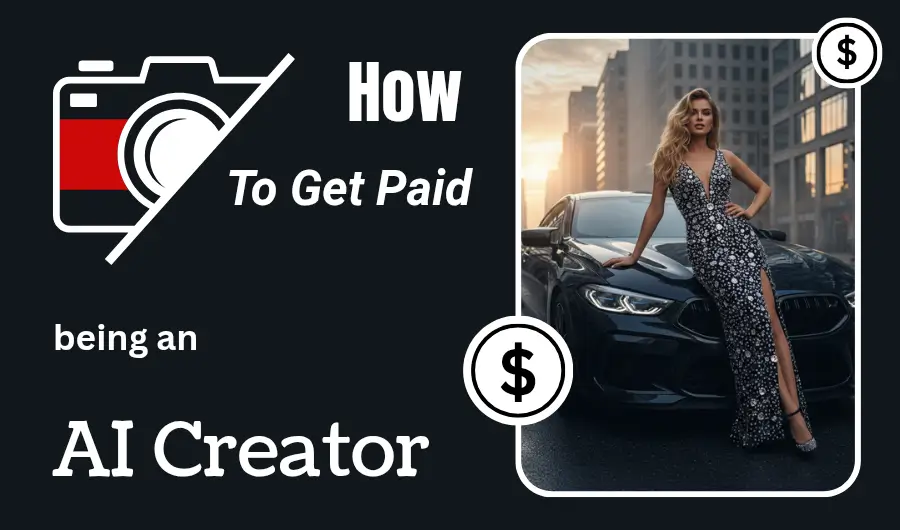
The rise of generative AI has lowered the technical barrier to creation, but it has not rewritten the fundamentals of how creators make money. Attention, trust, skill differentiation, and value delivery still matter just as much as they did before AI tools became mainstream.
Yet many AI creators approach monetization from the wrong angle. Instead of positioning themselves as skilled operators of powerful tools, they attempt to blur the line between human-made and AI-assisted work. In some cases, they present AI-generated images as real people, imply personal authorship over machine-generated outputs, or avoid disclosing AI use entirely. While this approach may generate short-term engagement, it undermines credibility and limits long-term earning potential.
The truth is simple: AI does not change how creators make money, it only changes how efficiently they can execute. The most sustainable AI creators are not those pretending AI doesn’t exist, but those who understand how to turn AI-enhanced skills into services, products, and systems that others are willing to pay for.
The creators who will last are the ones who understand that artificial intelligence is not the product. The product is still skill, clarity, reliability, and usefulness. AI only makes delivering those things easier.
This guide outlines seven practical, ethical, and scalable ways to monetize as an AI creator, methods that focus on selling skills, outcomes, and expertise, rather than deception.
1. Sell Your AI Skills to Other Creators
This is the simplest and most reliable starting point.
Creators already spend money to save time. AI allows you to save them more time, faster. That is the transaction.
You are not selling “AI.” You are selling work that is done quicker and delivered consistently.
A clear example is writing support.
Many creators need help with newsletters, scripts, captions, or blog posts. You can approach them directly and say:
“I help creators publish more often by handling first drafts and revisions using AI-assisted workflows.”
The buyer does not care about the tool. They care that their problem goes away.
This works for editing, research, content repurposing, and formatting. The key is to describe the result in plain terms. You are not an AI operator. You are a service provider who happens to use modern tools.
2. Sell Courses to Specific Creator Niches
People do not buy “AI courses.” They buy solutions to specific problems.
A course that says “Learn AI” is vague. A course that says “Use AI to write daily LinkedIn posts for B2B founders” is clear.
Pick one group. Speak directly to them. Solve one problem.
For example, you can build a short course for small YouTubers that teaches how to use AI to write scripts faster without losing personality. Or a course for freelancers showing how to use AI to speed up client proposals and research.
The language should be direct.
“Here is how to do X, using AI, so you save time and make more money.”
Do not frame the course around tools. Tools change. Frame it around outcomes. The course sells because it promises a practical improvement in someone’s work, not because it teaches technology.
You may be wondering how to go about selling this, so here's one strategy:
Start by offering something for free, but leave pathways for your paid offers. For instance, you can sell a free written course in file formats such as Google docs. Within this course, you can promote your paid courses that offer the individuals far more value than they are already getting.
By doing this, you build trust through your free offers because people will see the value, and can expect more from your paid offers.
3. Sell Done-for-You Content Packages
Some people do not want to learn anything. They just want the work done.
This is where done-for-you packages work well.
You can offer clear packages like:
“30 Instagram captions for coaches,”
“10 YouTube video outlines for finance creators,”
or “Weekly blog drafts for small businesses.”
AI allows you to produce these faster, but again, that is not the selling point. The selling point is that the buyer gets usable content without thinking.
You should clearly state what they receive, how often, and what it is for. Simple descriptions outperform clever ones.
This works especially well when targeting businesses instead of creators. Small businesses care about visibility and sales, not creative purity. If you help them show up online consistently and convert views into customers, they will pay.
4. Sell Templates, Prompts, and Systems
Many creators know what they want to do, but they do not know how to structure it. If you have figured out a repeatable way to get good results from AI, you can sell that structure.
This could be a prompt pack for writing email newsletters, a content calendar system for social media, or a step-by-step guide showing how to turn long videos into short clips using AI tools.
The key is to remove complexity. Do not sell “advanced prompt engineering.” Sell “copy-paste prompts that help you write faster.”
People pay for simplicity, not sophistication.
This works well because it scales. You build it once and sell it repeatedly. You are not selling creativity. You are selling organization and clarity.
5. Help Businesses Use AI for Marketing
Many small businesses know AI exists but do not know how to use it without damaging their brand.
This creates a clear opportunity.
You can approach businesses and say:
“I help small businesses use AI to write marketing content that increases revenue while keeping their brand voice consistent.”
That is understandable. It speaks to a real fear: sounding generic, and offers the perk of generating income.
You can help with email campaigns, website updates, product descriptions, or social media posts. AI makes this faster, but your value is in knowing what sounds right and what does not.
This works especially well locally or within specific industries like real estate, fitness, coaching, or e-commerce.
Businesses do not care if you are an “AI creator.” They care if you help them get more customers.
6. Build an Audience by Showing Process
Some creators try to hide AI. Others grow by showing exactly how they work.
You can build an audience by sharing how you use AI to improve productivity, quality, or consistency. This includes showing before-and-after examples, explaining why certain outputs work better, and demonstrating how to guide tools properly.
This attracts people who want to improve their own work.
Once you have attention, monetization becomes easier. You can sell courses, templates, services, or sponsorships. The audience trusts you because you are honest about your process.
Transparency becomes the brand.
This works particularly well on platforms like YouTube, Twitter, LinkedIn, Threads and newsletters, where people follow creators for insight, not illusion.
7. License AI-Generated Assets for Commercial Use
This is our favorite!
Many creators and businesses want ready-to-use assets they can legally publish, reuse, and build on. They do not want to create them themselves, and they do not want ambiguity around usage rights.
This creates a clear opportunity for AI creators.
You can generate and license assets such as illustrations, background images, social media visuals, presentation graphics, explainer visuals, or audio elements, and sell them with clear commercial usage terms. The value is not that the assets were made with AI. The value is that they are available, affordable, and safe to use.
For example, instead of saying you sell AI images, you say:
“I sell ready-to-use visual packs for content creators and small businesses, cleared for commercial use.”
That is language buyers understand.
This works especially well in niches where people need volume and consistency, such as social media managers, newsletter writers, course creators, or small marketing teams. They want assets they can drop into their work without worrying about copyright or sourcing.
You can sell these assets as bundles, subscriptions, or niche-specific packs. AI allows you to produce at scale, but trust and clarity are what make people buy. Clear labeling, clear licensing terms, and clear use cases matter more than the generation method.
This strategy works because it turns AI speed into inventory, not identity. You are not selling yourself. You are selling useful, reusable components that solve a real problem for people who just want to publish and move on.
Why Deception Fails as a Monetization Strategy
Trying to pass off AI work as fully human is not a business strategy. It is avoidance.
It avoids learning how to sell skills. It avoids choosing a market. It avoids explaining value clearly.
Eventually, audiences notice. Platforms change rules. Clients ask questions. Trust erodes.
Honest positioning, on the other hand, compounds. When people understand what you do and why it works, they recommend you. They return. They pay more over time.
AI does not cheapen creativity. Poor positioning does.
Conclusion: Sell Value
The creators who succeed with AI are not the ones pretending to be exceptional without tools. They are the ones who understand how to turn tools into leverage.
Making money as an AI creator is not about hiding process. It is about packaging usefulness.
If you can explain what you do in simple language, target a clear group, and deliver consistent results, AI becomes an advantage instead of a liability.
The game did not change. The speed did.
And the creators who understand that will be the ones still earning long after novelty fades.
Monetization has always rewarded those who solve real problems for real people. AI simply allows you to do that at scale, if you choose the right path.
AI Informed Newsletter
Stay informed on the fastest growing technology.
Disclaimer: The content on this page and all pages are for informational purposes only. We use AI to develop and improve our content — we love to use the tools we promote.
Course creators can promote their courses with us and AI apps Founders can get featured mentions on our website, send us an email.
Simplify AI use for the masses, enable anyone to leverage artificial intelligence for problem solving, building products and services that improves lives, creates wealth and advances economies.
A small group of researchers, educators and builders across AI, finance, media, digital assets and general technology.
If we have a shot at making life better, we owe it to ourselves to take it. Artificial intelligence (AI) brings us closer to abundance in health and wealth and we're committed to playing a role in bringing the use of this technology to the masses.
We aim to promote the use of AI as much as we can. In addition to courses, we will publish free prompts, guides and news, with the help of AI in research and content optimization.
We use cookies and other software to monitor and understand our web traffic to provide relevant contents, protection and promotions. To learn how our ad partners use your data, send us an email.
© newvon | all rights reserved | sitemap