

SpaceX Files to Take AI Data Centres Into Orbit With 1 million Satellites
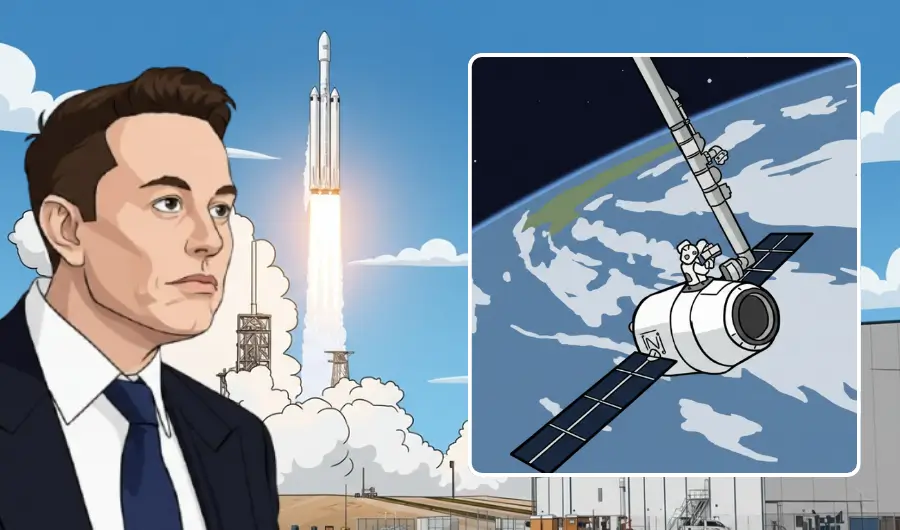
Elon Musk’s SpaceX has filed an application with the United States Federal Communications Commission (FCC) to deploy up to 1 million solar-powered satellites into low Earth orbit (LEO) to serve as space-based data centres for artificial intelligence (AI) computing, the company said in a regulatory filing on 31 January 2026.
The proposal, if approved, marks one of the most ambitious satellite network plans in history, aimed at meeting rising global demand for AI processing capacity by leveraging constant solar energy above Earth’s atmosphere.
SpaceX described the potential constellation as a means to provide cost-efficient, energy-light computing infrastructure in orbit, using sunlight to power AI workloads that require vast numbers of processors and large amounts of electrical power, according to the FCC filing. The filing did not set a timeline for deployment and represents a preliminary step in regulatory approval rather than a commitment to launch the full number of satellites proposed.
SpaceX, headquartered in Hawthorne, California, already operates one of the largest satellite networks through its Starlink internet service, comprising nearly 10 000 satellites in LEO. The new proposal would expand orbital infrastructure significantly by adding a network of small satellites designed to house data-centre functionality and support AI processing with near-constant solar power availability, the filing said.
Space-based computing infrastructure represents an emerging sector within the space economy, attracting interest from established technology firms and new entrants alike. Comparable initiatives include efforts by companies such as Starcloud, Inc., which also plans data centres in space, signaling a broader industry trend toward off-Earth computing solutions that could reduce dependency on terrestrial data centre facilities.
SpaceX’s FCC filing frames the orbital data-centre concept as a potential alternative to ground-based facilities that require extensive power and cooling systems. Traditional terrestrial data centres consume significant amounts of electricity and water for cooling; proponents of orbital designs argue that solar-powered satellites could deliver more efficient energy use, though the practical and economic viability remains untested at large scales.
The FCC application also alludes to broader aspirations for the satellite network, although such language is sometimes used in filings to illustrate long-term vision rather than immediate operational plans. SpaceX stated that the proposed constellation could serve computing needs for “billions of users globally”, and described the satellite network as a step toward advanced space capabilities, referencing theoretical frameworks of high-energy capture civilizations.
Industry observers note that filings for large satellite constellations often list numbers far exceeding the likely deployed quantity, enabling future flexibility in design and scale. SpaceX, for example, previously filed for approval to launch tens of thousands of Starlink satellites but currently operates a fraction of the authorised capacity.
The growing number of satellites in LEO, including those from SpaceX and others, has raised concerns among astronomers and space-traffic-management experts about space congestion and the increased risk of collisions. Critics argue that adding large constellations compounds the challenge of tracking and avoiding orbital debris, which could escalate collision risks and complicate space operations.
SpaceX’s request for FCC approval comes amid broader debates over the future of satellite infrastructure, AI computing demands, and space sustainability. While the regulatory process moves forward, analysts will be watching how the company’s plans interact with global efforts to balance technological innovation with orbital safety and environmental considerations.
AI Informed Newsletter
Stay informed on the fastest growing technology.
Disclaimer: The content on this page and all pages are for informational purposes only. We use AI to develop and improve our content — we love to use the tools we promote.
Course creators can promote their courses with us and AI apps Founders can get featured mentions on our website, send us an email.
Simplify AI use for the masses, enable anyone to leverage artificial intelligence for problem solving, building products and services that improves lives, creates wealth and advances economies.
A small group of researchers, educators and builders across AI, finance, media, digital assets and general technology.
If we have a shot at making life better, we owe it to ourselves to take it. Artificial intelligence (AI) brings us closer to abundance in health and wealth and we're committed to playing a role in bringing the use of this technology to the masses.
We aim to promote the use of AI as much as we can. In addition to courses, we will publish free prompts, guides and news, with the help of AI in research and content optimization.
We use cookies and other software to monitor and understand our web traffic to provide relevant contents, protection and promotions. To learn how our ad partners use your data, send us an email.
© newvon | all rights reserved | sitemap