

Who is Sam Altman? | Biography
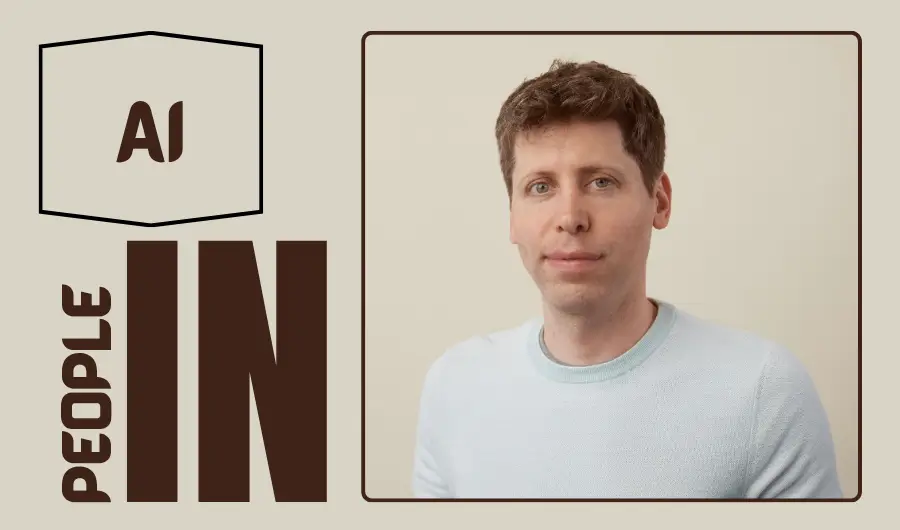
Samuel Harris Altman, known widely as Sam Altman, stands as one of the most influential figures in contemporary technology, particularly in the field of artificial intelligence (AI). As a visionary entrepreneur, investor, and executive leader, Altman’s professional trajectory has repeatedly intersected with moments that have shaped Silicon Valley and the global AI landscape.
As of the mid-2020s, his role as Chief Executive Officer of OpenAI places him squarely at the forefront of debates about the future of intelligence, work, ethics, and human-computer interaction.
Early Life and Formative Influences
Sam Altman was born on April 22, 1985, in Chicago, Illinois, U.S., and grew up primarily in St. Louis, Missouri. From a very early age, he demonstrated a passion for computing and technology, receiving his first personal computer at approximately eight years old, an event that ignited a lifelong fascination with programming, systems, and digital innovation.
He attended the John Burroughs School, a preparatory school known for academic rigor, before enrolling at Stanford University to study computer science. However, driven by entrepreneurial ambition, Altman left Stanford before completing his degree, choosing instead to pursue startup ventures full time.
These early experiences in education and technology immersed him in an environment where the promise and risks of new digital tools were becoming part of mainstream culture. The choice to drop out of Stanford was emblematic of a broader Silicon Valley ethos valuing innovation and disruption over conventional career paths.
Entrepreneurial Beginnings: Loopt and Early Ventures
At 19 years old in 2005, Altman co-founded Loopt, a mobile location-based social networking application that aimed to connect users based on geographic proximity. In the pre-smartphone era, location services were cutting-edge technology, and Loopt attracted significant attention, raising over $30 million in venture capital funding. Despite the initial enthusiasm and financing, the platform failed to achieve widespread adoption and was ultimately acquired in 2012 by Green Dot Corporation for approximately $43.4 million.
Though Loopt did not transform the social media ecosystem, the experience was formative. Altman learned about raising capital, scaling engineering teams, and navigating competitive product markets, skills that would serve him well in his later roles. Moreover, selling his first company afforded him the financial backing and credibility to enter the world of startup acceleration and angel investing.
Leadership at Y Combinator: Shaping Startup Culture
In 2011, Altman joined Y Combinator (YC)—a highly influential technology startup accelerator based in Silicon Valley—as a part-time partner. Initially focused on helping new founders succeed, Altman quickly distinguished himself through strategic insight and mentorship. In 2014, YC’s co-founder Paul Graham appointed him President of Y Combinator, a role that placed Altman at the helm of one of the world’s most consequential startup incubators.
Under Altman’s leadership, YC expanded dramatically in scope and impact. The accelerator broadened its investment approach with YC Continuity, a later-stage investment fund; launched YC Research, a nonprofit research division; and increased funding and support for companies with global reach. YC-backed firms went on to include Airbnb, Dropbox, Reddit, Stripe, DoorDash, Twitch, and other household names—pushing the total valuation of YC companies into the tens of billions of dollars.
Altman’s tenure also highlighted his belief in supporting mission-driven founders and technologies with the potential to alter societal norms and economic structures, embracing ideas ranging from cryptocurrency to biotechnology. His success as an accelerator leader cemented his reputation as a kingmaker in technology investing circles and introduced him to broader conversations about the intersection of innovation, public policy, and economics.
Founding OpenAI: Vision and Purpose
While at Y Combinator, Altman co-founded OpenAI in December 2015 along with a team of leading tech figures, including Elon Musk and others. The organization launched with an explicit mission: to advance artificial intelligence in a way that benefits all of humanity, rather than being constrained by short-term profit motives or narrow commercial interests.
Altman transitioned to focus fully on OpenAI by 2019, assuming the role of CEO. Under his leadership, OpenAI made landmark breakthroughs in generative AI, most visibly through GPT-3 and GPT-4, the foundational models behind the conversational AI tool ChatGPT. These technologies dramatically expanded public awareness and adoption of AI, facilitating applications in writing, coding, education, research, and creative work.
Beyond text generation, OpenAI under Altman’s guidance developed tools such as DALL·E for image generation, Whisper for speech-to-text, and Codex for aiding software development, among other systems extending AI’s capabilities. These innovations highlighted Altman’s belief that AI could augment human capability while providing platforms for solving complex global challenges.
The ChatGPT Phenomenon
Perhaps no project has defined Altman’s tenure at OpenAI more than ChatGPT. Released in 2022, ChatGPT quickly became one of the fastest-adopted consumer technologies in history, attracting millions of users within days of launch. Its ability to generate coherent, contextually rich text based on natural language prompts captivated enterprises, developers, educators, and consumers alike, intensifying debates about automation, workforce transformation, and the ethical application of AI systems.
ChatGPT’s success galvanized interest and investments in AI but also provoked critical conversations about fairness, bias, misuse, and governance, issues that Altman himself addressed in congressional testimony and public discussions. His leadership style emphasized both technological optimism and caution, advocating regulatory frameworks that balance innovation with safety.
Leadership Challenges: 2023 Board Turmoil
In November 2023, Altman’s leadership faced an extraordinary challenge when the OpenAI board of directors abruptly removed him as CEO, citing concerns over communication and governance. The decision triggered significant backlash from employees, investors, and industry allies, including commitments from partners to support Altman in alternative roles. Within days, all but one board member resigned, and Altman was reinstated as CEO under a restructured governance arrangement.
The incident highlighted competing visions for AI development, governance, and corporate structure. It raised questions about accountability, transparency, and the direction of organizations tasked with stewarding transformative technologies. However, the resolution reinforced Altman’s influence within OpenAI and the broader AI ecosystem, validating his leadership in the eyes of many stakeholders.
Broad Influence: Investing, Advising, and Thought Leadership
Outside of OpenAI, Altman is a prolific angel investor and advisor. His investment portfolio has included stakes in influential startups such as Airbnb, Stripe, Reddit, Notion, and more. He has also supported ventures in nuclear energy, biotechnology, and cryptocurrency, demonstrating a willingness to back ideas with long-term societal implications rather than immediate commercial returns.
Altman has positioned himself as a public intellectual on technological risk and social strategy, engaging in discussions about universal basic income, the future of work, and ethical frameworks for AI governance. His public commentary emphasizes responsible innovation, cautioning against unregulated development while advocating for entrepreneurial ecosystems that empower creators and problem-solvers.
Recent Ventures: Merge Labs and Brain-Computer Interfaces
In early 2026, Altman further expanded his influence by launching Merge Labs, a neurotechnology startup focused on developing non-invasive brain-computer interface (BCI) technologies. With significant investment, including from OpenAI, Merge Labs aims to integrate AI with brain signals using advanced modalities like ultrasound, an approach distinct from traditional implant-based systems.
This new venture demonstrates Altman’s commitment to exploring frontiers where technology intersects directly with human cognition, potentially reshaping how people interact with machines and expanding applications in medicine, communication, and human augmentation.
Personal Life and Public Recognition
Altman’s personal life is characterized by privacy and selective disclosure. He married software engineer Oliver Mulherin in 2024, and the couple welcomed their first child, a son, in 2025. His personal philosophy blends technological optimism with humanitarian concern, often reflecting on how innovation should solve fundamental human problems such as health, learning, and equity.
Professionally, Altman has earned recognition as one of the defining leaders of the AI age. In 2025, he received the Axel Springer Award for his contributions to technological innovation and ethical reflection, affirming his role as both a creator and a steward of transformative systems.
Legacy and Future Impact
Sam Altman’s legacy is unfolding in real time. As CEO of OpenAI and founder of ventures spanning AI, neurotech, and deep tech investing, he occupies a central position in ongoing conversations about the future of human capability, economic organization, and ethical responsibility in a world shaped by intelligent machines.
Altman’s journey, from a precocious programmer with a startup idea to a global tech leader, illustrates both the promise and complexity of innovation in the 21st century. His work invites questions about how societies balance power, opportunity, and risk, and how leaders can guide transformative technologies toward the broadest benefit.
AI Informed Newsletter
Stay informed on the fastest growing technology.
Disclaimer: The content on this page and all pages are for informational purposes only. We use AI to develop and improve our content — we love to use the tools we promote.
Course creators can promote their courses with us and AI apps Founders can get featured mentions on our website, send us an email.
Simplify AI use for the masses, enable anyone to leverage artificial intelligence for problem solving, building products and services that improves lives, creates wealth and advances economies.
A small group of researchers, educators and builders across AI, finance, media, digital assets and general technology.
If we have a shot at making life better, we owe it to ourselves to take it. Artificial intelligence (AI) brings us closer to abundance in health and wealth and we're committed to playing a role in bringing the use of this technology to the masses.
We aim to promote the use of AI as much as we can. In addition to courses, we will publish free prompts, guides and news, with the help of AI in research and content optimization.
We use cookies and other software to monitor and understand our web traffic to provide relevant contents, protection and promotions. To learn how our ad partners use your data, send us an email.
© newvon | all rights reserved | sitemap