

Yann LeCun Warns Future AI Biz Tools Could Become Obsolete | News
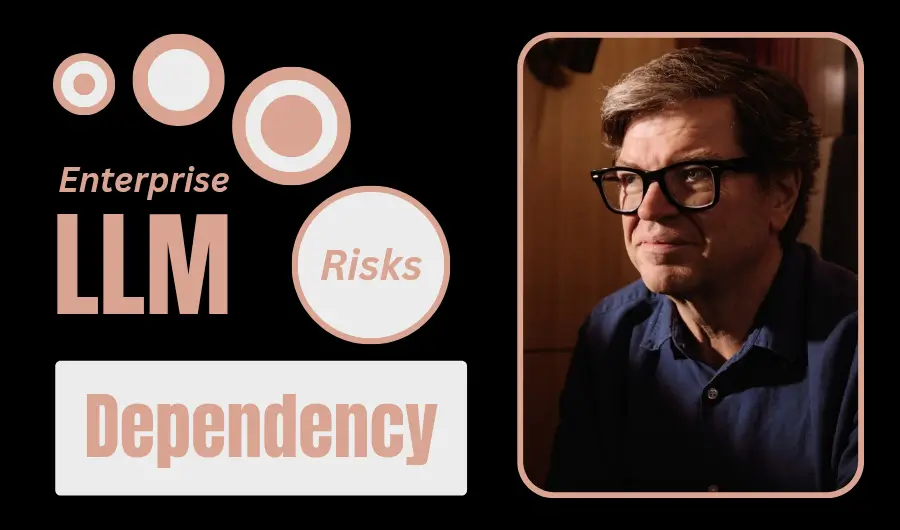
Yann LeCun, widely acknowledged as one of the founding figures in modern artificial intelligence, has issued a stark outlook on the future of business-oriented AI software built on today’s popular large language models. In remarks reflecting his long-standing critiques of current AI development priorities, LeCun cautioned that many high-cost enterprise tools dependent on these models may soon be overtaken by fundamentally different approaches to machine intelligence.
LeCun’s perspective emerges amid a broader reassessment in the AI sector about the long-term value of language-centric systems versus next-generation architectures capable of deeper reasoning and world modeling. As firms across sectors invest billions in AI automation, adoption and integration initiatives based on large language models (LLMs), LeCun contends that those investments could be stranded by technological shifts in the years ahead.
AI Business Tools Face Obsolescence Risk
LeCun’s comments focus primarily on the limitations inherent in LLM-based AI platforms that dominate current business applications, including customer support assistants, automated content generation systems, and productivity enhancers. These systems, he argues, are effective within narrow domains but lack the comprehensive predictive and reasoning capabilities necessary for broader task automation. This shortfall, LeCun says, could soon make them obsolete compared to emerging models designed for richer sensory input and planning.
“LLM-based AI is not a path to superintelligence or even human-level intelligence,” LeCun emphasized, describing a prevalent industry focus he characterizes as a ‘herd effect’ rather than a strategic research priority. His warning implies that businesses banking on existing AI architectures risk investing in technologies that may not meet future operational demands or competitive standards.
LeCun’s critique aligns with his broader view that large language models, while transformative in many respects, suffer from intrinsic weaknesses when applied to complex real-world tasks outside of text manipulation. He asserts that systems capable of understanding sensory data such as vision and environmental information will be far more impactful for business automation and real-world decision-making.
Departure From Meta and New Venture Focus
LeCun left Meta in late 2025, after more than a decade leading the company’s AI research initiatives. He now heads Advanced Machine Intelligence Labs, a Paris-based startup devoted to the development of AI systems that extend beyond language-centric capabilities. This move highlights his belief that research agendas at major technology corporations have skewed too heavily toward short-term business objectives at the expense of longer-term scientific innovation.
During his tenure at Meta, LeCun co-founded the Facebook AI Research (FAIR) lab and contributed significantly to breakthroughs in deep learning and neural network models, including open-source models that have influenced industry applications worldwide. Despite this legacy, his current focus is on architectures he believes offer a clearer path to artificial general intelligence and autonomous reasoning.
LeCun’s new venture reflects an ambition to develop AI systems capable of integrating and interpreting diverse sensory inputs, possessing a persistent memory, and executing complex sequences of action based on long-term objectives. This contrasts with the reactive, prompt-based operations of LLMs that dominate most contemporary business solutions.
Industry Reactions and Wider Debate
LeCun’s assessments have added fuel to ongoing debate within the technology sector about the value and limits of LLM-based AI. While many corporations continue to deploy and commercialize language-driven models for customer engagement, content production, and workflow automation, critics argue that these technologies are essentially incremental improvements on existing capabilities. LeCun’s stance suggests that a paradigm shift toward AI with genuine understanding and reasoning abilities may be imminent.
This debate is consistent with broader concerns about how AI evolves beyond narrow application profiles into systems with more holistic, awareness-driven competencies. Advocates of alternative approaches, including so-called “world models,” contend that true artificial intelligence must learn representations of physical reality, cause-effect relationships, and predictive frameworks for dynamic environments, areas where current LLMs struggle.
In asserting that many enterprise AI tools are built on technologies destined to be outmoded, LeCun has challenged business leaders and technology strategists to reconsider investment priorities. His message is particularly resonant at a time when organizations of all sizes are accelerating adoption of AI platforms, often based on language models that are widely regarded as the leading edge of commercial AI.
Implications for AI Investment and Innovation
The implications of LeCun’s critique extend to technology investors, corporate innovation teams, and developers, particularly in sectors where AI tools are expected to drive operational efficiencies, customer engagement, and competitive differentiation. If business executives accept LeCun’s position that current LLM-based systems have limited long-term viability, investment strategies may pivot toward emerging AI paradigms that prioritize reasoning, adaptability, and real-world problem solving.
This potential shift could reshape the landscape of AI research and commercialization, triggering new alliances, funding flows, and research agendas aimed at advancing next-generation machine intelligence. As LeCun demonstrates, the path to these innovations may not lie within the technologies that currently command the largest share of market attention and investment.
AI Informed Newsletter
Stay informed on the fastest growing technology.
Disclaimer: The content on this page and all pages are for informational purposes only. We use AI to develop and improve our content — we love to use the tools we promote.
Course creators can promote their courses with us and AI apps Founders can get featured mentions on our website, send us an email.
Simplify AI use for the masses, enable anyone to leverage artificial intelligence for problem solving, building products and services that improves lives, creates wealth and advances economies.
A small group of researchers, educators and builders across AI, finance, media, digital assets and general technology.
If we have a shot at making life better, we owe it to ourselves to take it. Artificial intelligence (AI) brings us closer to abundance in health and wealth and we're committed to playing a role in bringing the use of this technology to the masses.
We aim to promote the use of AI as much as we can. In addition to courses, we will publish free prompts, guides and news, with the help of AI in research and content optimization.
We use cookies and other software to monitor and understand our web traffic to provide relevant contents, protection and promotions. To learn how our ad partners use your data, send us an email.
© newvon | all rights reserved | sitemap