

What Are AI Hallucinations?
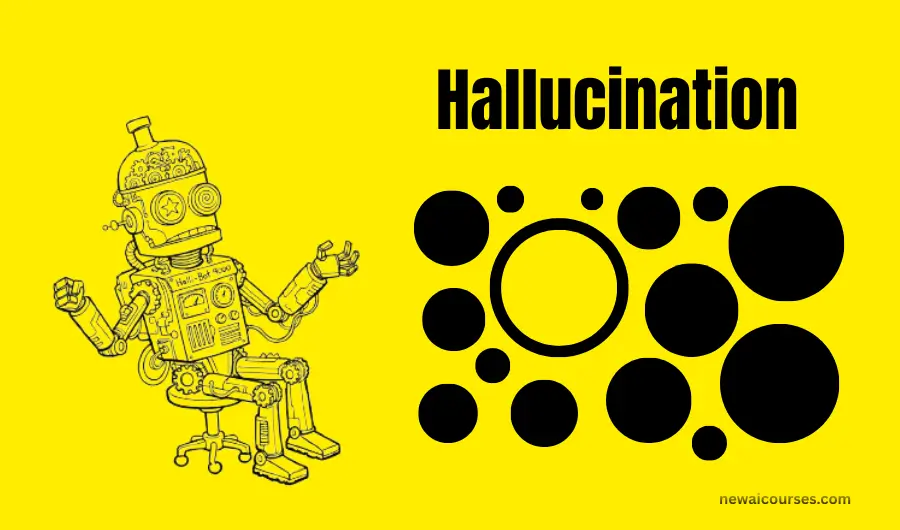
AI hallucinations occur when an artificial intelligence system generates information that appears plausible but is factually incorrect or entirely fabricated.
Defining AI Hallucinations
An AI hallucination refers to a phenomenon in which an artificial intelligence system produces outputs that are syntactically coherent and contextually relevant but contain inaccurate, misleading, or invented information. The term is widely used in the field of machine learning and natural language processing to describe situations where an AI model generates content that has no grounding in its training data, external sources, or verified facts.
The concept gained prominence with the development of large language models that generate human-like text through statistical pattern prediction. Systems such as GPT-4 developed by OpenAI, LaMDA developed by Google, and Claude developed by Anthropic can produce highly fluent responses, yet their outputs may sometimes include fabricated citations, invented historical details, or incorrect technical explanations. Because these models are designed to predict the most probable sequence of words rather than verify factual accuracy, hallucinations can occur even when the response appears confident and authoritative.
In technical terms, hallucination describes a mismatch between generated output and verifiable reality. The system is not intentionally misleading; instead, it reflects the probabilistic nature of generative AI systems that construct responses based on patterns learned during training.
Why AI Systems Hallucinate
AI hallucinations arise primarily from the statistical architecture underlying modern machine learning models. Large language models are trained on vast datasets containing books, articles, code repositories, and other forms of text. During training, the model learns to predict the next word in a sequence based on patterns in that data.
This predictive mechanism does not inherently encode factual verification. When the model encounters prompts that require information outside its learned patterns or beyond the data distribution it has seen, it may generate plausible text that fills the gap without confirming its accuracy. The output can therefore appear credible while containing invented details.
Researchers at Stanford University and Massachusetts Institute of Technology have documented that generative models tend to hallucinate when responding to ambiguous questions, when training data lacks sufficient examples, or when the prompt encourages confident narrative responses rather than cautious uncertainty. These conditions push the model toward producing statistically likely text even if that text is not factually correct.
Another contributing factor is the compression of knowledge within neural network parameters. A large language model does not store facts as a structured database. Instead, information is distributed across millions or billions of parameters. When the model reconstructs information from this compressed representation, it may blend fragments of multiple sources, producing a response that resembles a real fact but does not correspond to any verified source.
Types of AI Hallucinations
AI hallucinations can manifest in several distinct forms depending on the context of the model’s output. In text generation systems, hallucinations often appear as fabricated citations or references. For example, language models may generate academic-sounding paper titles, journal names, or author lists that do not exist. This behavior has been observed in studies conducted by researchers at the University of Washington examining citation accuracy in generative AI systems.
Another form occurs when a model incorrectly attributes statements to real individuals or organizations. Because generative systems often synthesize language patterns associated with authoritative sources, they may create quotations or policy positions that were never issued by the named institution.
Hallucinations also occur in visual AI systems. Image generation models can produce objects or features that appear realistic but are structurally incorrect. For example, early versions of image generation systems developed by OpenAI and Stability AI sometimes generated images with distorted human anatomy, such as incorrect numbers of fingers, reflecting the model’s imperfect internal representation of complex visual patterns.
In automated summarization systems, hallucinations can emerge as fabricated details inserted into otherwise accurate summaries. Researchers at Google Research documented this issue when evaluating neural summarization models, noting that the systems occasionally introduced statements that were not present in the original source material.
Real-World Examples and Documented Cases
Several widely documented incidents illustrate how AI hallucinations manifest in practical applications. In 2023, attorneys in a legal case before the United States District Court for the Southern District of New York submitted legal filings that included citations generated by a language model. The filings referenced judicial decisions that did not exist, demonstrating how hallucinated content can enter professional workflows when outputs are not independently verified.
Academic research has also highlighted the issue. A 2023 study from researchers at Stanford University evaluating language models in medical question answering found that the systems occasionally produced fabricated clinical references or incorrect interpretations of medical guidelines. Because medical information requires high factual precision, these hallucinations raise significant concerns about the use of generative AI in healthcare contexts.
Technology companies developing AI systems have publicly acknowledged the problem. Documentation published by OpenAI and Google notes that large language models can generate inaccurate or fabricated content and that outputs should be verified before being used in critical decision-making processes.
Technical Factors That Increase Hallucination Risk
Several architectural and operational conditions increase the probability of hallucinations in generative AI systems. One factor is prompt ambiguity. When a prompt lacks clear constraints or requests speculative explanations, the model may prioritize linguistic coherence over factual reliability.
Training data quality also plays a central role. If the dataset contains conflicting or inaccurate information, the model may learn patterns that blend correct and incorrect statements. Because generative models cannot easily distinguish authoritative sources from unreliable ones unless explicitly trained to do so, the resulting outputs may reflect this mixture.
Another factor is the absence of retrieval mechanisms. Pure language models rely entirely on internal parameters to produce responses. In contrast, retrieval-augmented systems integrate external databases or search engines to ground responses in verifiable documents. Research conducted by Meta AI has shown that integrating retrieval systems can significantly reduce hallucination rates by providing models with factual references during generation.
Model temperature and sampling strategies also influence hallucination frequency. Higher temperature settings increase randomness in word selection, which can produce more creative outputs but also raises the likelihood of fabricated details.
Methods for Reducing AI Hallucinations
AI developers employ several technical strategies to reduce hallucination rates. One widely used approach is reinforcement learning with human feedback. In this training method, human evaluators review model outputs and rank them according to accuracy and usefulness. Systems such as those developed by OpenAI incorporate this feedback to train models to prefer responses that acknowledge uncertainty rather than invent unsupported information.
Another approach involves integrating retrieval systems that access external knowledge sources during response generation. Retrieval-augmented generation frameworks allow the model to reference verified documents, which reduces reliance on internal statistical memory alone.
Evaluation benchmarks also play a role in improving model reliability. Organizations such as Stanford University and Hugging Face have developed testing frameworks that measure hallucination frequency across tasks including summarization, translation, and question answering. These benchmarks allow developers to compare models and identify failure patterns.
Guardrails and verification layers are also implemented in production systems. These mechanisms may include fact-checking modules, citation validation, or domain-specific constraints that limit the model’s ability to generate unsupported claims.
Distinguishing Hallucinations from Other AI Errors
AI hallucinations are sometimes confused with other categories of model failure, but the distinctions are technically important. A hallucination specifically refers to the generation of content that is fabricated or unsupported by available information while still appearing coherent.
This differs from simple factual errors, which occur when a model incorrectly states a known fact but does not invent entirely new information. Hallucinations also differ from bias in AI systems, which arises from skewed training data that systematically favors certain perspectives or outcomes.
Another related concept is model uncertainty. In traditional machine learning classification tasks, uncertainty appears as low confidence scores or ambiguous predictions. In generative language models, however, uncertainty is often hidden behind fluent text generation, which can make hallucinated content appear authoritative.
Understanding these distinctions is important for evaluating the reliability of AI outputs and designing systems that mitigate different types of errors.
The Ongoing Challenge of Reliable AI Generation
AI hallucinations remain a central challenge in the deployment of generative artificial intelligence systems. As models become more capable of producing fluent language, images, and code, the risk of convincingly incorrect outputs increases alongside their usefulness.
Research efforts across industry and academia continue to focus on grounding AI systems in verifiable information sources, improving training data quality, and designing evaluation frameworks that prioritize factual accuracy. Organizations including OpenAI, Google, and Meta Platforms have publicly identified hallucination reduction as a key area of ongoing development.
Despite these improvements, the probabilistic nature of generative models means that hallucinations cannot yet be completely eliminated. For this reason, AI outputs are typically treated as assistive tools rather than authoritative sources, particularly in domains such as law, medicine, and scientific research where factual precision is essential.
AI Informed Newsletter
Stay informed on the fastest growing technology.
Disclaimer: The content on this page and all pages are for informational purposes only. We use AI to develop and improve our content — we love to use the tools we promote.
Course creators can promote their courses with us and AI apps Founders can get featured mentions on our website, send us an email.
Simplify AI use for the masses, enable anyone to leverage artificial intelligence for problem solving, building products and services that improves lives, creates wealth and advances economies.
A small group of researchers, educators and builders across AI, finance, media, digital assets and general technology.
If we have a shot at making life better, we owe it to ourselves to take it. Artificial intelligence (AI) brings us closer to abundance in health and wealth and we're committed to playing a role in bringing the use of this technology to the masses.
We aim to promote the use of AI as much as we can. In addition to courses, we will publish free prompts, guides and news, with the help of AI in research and content optimization.
We use cookies and other software to monitor and understand our web traffic to provide relevant contents, protection and promotions. To learn how our ad partners use your data, send us an email.
© newvon | all rights reserved | sitemap