

How Does AI Understand Text?
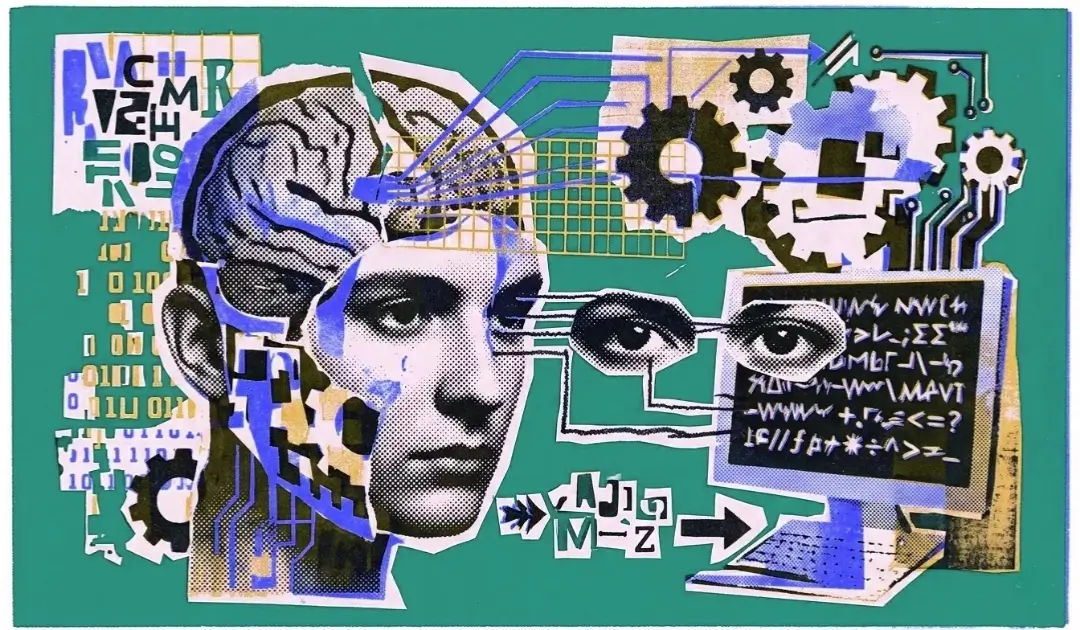
Artificial intelligence understands text by converting language into structured numerical representations that can be processed, learned from, and interpreted by machine learning models.
Foundations of Text Representation
At the core of AI text understanding lies the transformation of human language into a machine-readable format. Natural language is inherently ambiguous, context-dependent, and variable in structure, which makes direct computational processing impractical. To address this, AI systems rely on techniques from the field of natural language processing, a subdiscipline of artificial intelligence concerned with the interaction between computers and human language.
The first stage in this transformation involves tokenization, where raw text is segmented into smaller units such as words, subwords, or characters. Modern systems often use subword tokenization methods, such as Byte Pair Encoding or WordPiece, which allow models to efficiently handle rare or unknown words by breaking them into smaller, more frequent components. This approach ensures a balance between vocabulary size and linguistic coverage.
Following tokenization, each token is mapped to a numerical vector through a process known as embedding. These vectors are not arbitrary; they are learned representations that encode semantic and syntactic relationships between words. For example, embedding models trained on large corpora can capture relationships such as similarity, analogy, and contextual usage. Early implementations like Word2Vec, developed by Google, and GloVe, developed by Stanford University, demonstrated that vector arithmetic could reflect linguistic structure, establishing a foundation for more advanced models.
Contextual Understanding Through Neural Networks
While static embeddings provide a baseline representation of meaning, they fail to account for context. The meaning of a word often depends on its surrounding words, and static models assign the same vector regardless of usage. This limitation led to the development of contextual embeddings, where the representation of a word changes depending on its context within a sentence.
Neural network architectures, particularly recurrent neural networks and their variants such as Long Short-Term Memory networks, were initially used to capture sequential dependencies in text. These models process text in order, maintaining a hidden state that evolves as each token is read. However, their sequential nature introduces limitations in capturing long-range dependencies and parallelizing computation.
The introduction of the transformer architecture, as described in the 2017 paper “Attention Is All You Need” by researchers at Google, marked a significant advancement. Transformers replace sequential processing with a mechanism known as self-attention, which allows the model to evaluate the relationships between all tokens in a sequence simultaneously. This enables more efficient computation and a more robust understanding of context, particularly in long and complex sentences.
Self-attention works by assigning weights to each token in relation to every other token, effectively determining which parts of the text are most relevant when interpreting a specific word. This mechanism allows the model to capture nuanced dependencies, such as subject-object relationships, co-reference, and hierarchical structure, without relying on fixed positional constraints.
Language Modeling and Training Objectives
AI systems learn to understand text through training objectives that force them to model linguistic patterns. One of the most widely used approaches is language modeling, where the system is trained to predict missing or future tokens based on context. This objective encourages the model to internalize grammar, semantics, and world knowledge implicitly present in the training data.
Bidirectional models, such as BERT developed by Google, use masked language modeling, where certain tokens are hidden and the model must predict them using both left and right context. This contrasts with autoregressive models, which predict the next token in a sequence based only on preceding tokens. Both approaches contribute to text understanding, though they differ in how context is utilized during training and inference.
The scale of training data plays a critical role in model performance. Large datasets composed of books, articles, and web content provide diverse linguistic examples, enabling models to generalize across domains. However, the quality and representativeness of this data also influence the model’s ability to produce accurate and unbiased interpretations.
Syntax, Semantics, and Pragmatics
Understanding text requires more than recognizing individual words; it involves interpreting multiple layers of linguistic structure. Syntax refers to the arrangement of words and phrases to create well-formed sentences. AI models learn syntactic patterns through exposure to large corpora, identifying structures such as subject-verb agreement and clause hierarchy.
Semantics involves the meaning of words and sentences. Through embedding spaces and contextual modeling, AI systems capture semantic relationships, enabling them to distinguish between different senses of a word based on context. For example, the word “bank” can refer to a financial institution or the side of a river, and the surrounding text determines the intended meaning.
Pragmatics extends beyond literal meaning to consider context, intent, and implied information. While current AI systems can approximate pragmatic understanding by recognizing patterns in data, this remains an area of ongoing research. Models may infer tone, sentiment, or intent, but their interpretations are ultimately based on statistical associations rather than true comprehension.
Role of Pretraining and Fine-Tuning
Modern AI systems typically undergo a two-stage training process: pretraining and fine-tuning. During pretraining, the model is exposed to vast amounts of unlabeled text and learns general language patterns through objectives like masked or autoregressive prediction. This stage establishes a broad linguistic foundation.
Fine-tuning adapts the pretrained model to specific tasks, such as sentiment analysis, question answering, or machine translation. This is achieved by training the model on smaller, labeled datasets relevant to the target application. Fine-tuning allows the model to specialize while retaining the general knowledge acquired during pretraining.
Organizations such as OpenAI, Google, and Meta have developed large-scale language models that leverage this paradigm. Systems like GPT, BERT, and LLaMA demonstrate how pretraining on massive datasets, followed by targeted adaptation, enables high-performance text understanding across a wide range of tasks.
Limitations and Interpretability
Despite their capabilities, AI systems do not “understand” text in the human cognitive sense. Their interpretations are derived from statistical correlations rather than conscious reasoning or experiential knowledge. This distinction is critical when evaluating model outputs, particularly in high-stakes applications.
One challenge is interpretability. The internal representations learned by deep neural networks are high-dimensional and not easily mapped to human-understandable concepts. Researchers have developed techniques such as attention visualization and probing classifiers to analyze model behavior, but a complete understanding of how these systems encode meaning remains incomplete.
Another limitation involves handling ambiguity and rare contexts. While large models perform well on common patterns, they may struggle with novel or highly specialized language. Additionally, biases present in training data can influence model outputs, leading to skewed or inappropriate interpretations.
Continuous Advancements in Text Understanding
The field of AI text understanding continues to evolve, driven by improvements in model architecture, training techniques, and data curation. Recent research focuses on enhancing reasoning capabilities, reducing bias, and improving efficiency through techniques such as parameter sharing and model compression.
Efforts are also underway to integrate multimodal understanding, where text is processed alongside images, audio, or structured data. This approach aims to create more comprehensive systems capable of interpreting language in richer, real-world contexts.
Ultimately, AI understands text through a layered process of representation, contextualization, and pattern learning. While it does not replicate human cognition, it achieves functional comprehension by modeling the statistical structure of language at scale, enabling practical applications across communication, information retrieval, and automation.
AI Informed Newsletter
Stay informed on the fastest growing technology.
Disclaimer: The content on this page and all pages are for informational purposes only. We use AI to develop and improve our content — we love to use the tools we promote.
Course creators can promote their courses with us and AI apps Founders can get featured mentions on our website, send us an email.
Simplify AI use for the masses, enable anyone to leverage artificial intelligence for problem solving, building products and services that improves lives, creates wealth and advances economies.
A small group of researchers, educators and builders across AI, finance, media, digital assets and general technology.
If we have a shot at making life better, we owe it to ourselves to take it. Artificial intelligence (AI) brings us closer to abundance in health and wealth and we're committed to playing a role in bringing the use of this technology to the masses.
We aim to promote the use of AI as much as we can. In addition to courses, we will publish free prompts, guides and news, with the help of AI in research and content optimization.
We use cookies and other software to monitor and understand our web traffic to provide relevant contents, protection and promotions. To learn how our ad partners use your data, send us an email.
© newvon | all rights reserved | sitemap