

What Is Intelligence Amplification?
Intelligence Amplification (IA) enhances human cognitive abilities using technology, prioritizing human–machine collaboration over autonomy.
Defining Intelligence Amplification
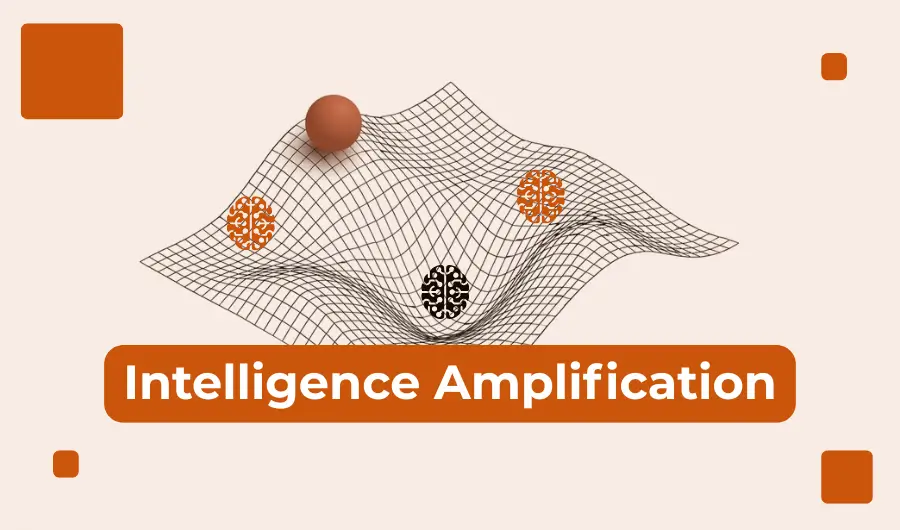
Intelligence Amplification refers to the design and use of systems that extend, support, or enhance human intellectual capabilities rather than replace them. The concept emphasizes a symbiotic relationship between humans and machines, where computational systems improve decision-making, learning, creativity, and problem-solving while keeping the human as the central agent of control. Unlike artificial intelligence systems that aim to simulate or replicate human cognition independently, IA systems are explicitly built to augment human reasoning processes.
The foundational premise of IA is that human intelligence, while adaptable and creative, is limited by biological constraints such as memory capacity, processing speed, and susceptibility to cognitive bias. By integrating computational tools, these limitations can be mitigated, enabling individuals to operate at higher levels of analytical and strategic performance.
Historical Origins and Conceptual Development
The formal articulation of Intelligence Amplification is closely associated with Douglas Engelbart, who introduced the idea in the 1960s. Engelbart’s work at the Stanford Research Institute focused on augmenting human intellect through interactive computing. His 1962 report, Augmenting Human Intellect: A Conceptual Framework, outlined how computers could serve as tools to improve human problem-solving capabilities rather than function as independent decision-makers.
Engelbart’s vision materialized in early innovations such as the computer mouse, hypertext systems, and collaborative computing environments, all of which were designed to enhance human interaction with information. His work established the theoretical and practical foundation for IA by demonstrating that technology could extend human cognition without displacing it.
Distinction Between Intelligence Amplification and Artificial Intelligence.
A precise distinction between Intelligence Amplification and artificial intelligence is essential for understanding the domain. Artificial intelligence focuses on building systems capable of performing tasks that typically require human intelligence, often with minimal or no human intervention. In contrast, IA prioritizes systems that require continuous human involvement, using computational power to enhance human input rather than replace it.
For example, an AI-driven autonomous trading algorithm operates independently based on predefined models and real-time data analysis. An IA-based system, by contrast, would provide a human trader with advanced analytics, predictive modeling, and visualization tools to improve decision-making while leaving the final judgment to the human operator.
This distinction is not merely philosophical but architectural. IA systems are designed with interfaces, feedback mechanisms, and interpretability features that ensure human comprehension and control. AI systems, particularly those based on deep learning, may operate as opaque models with limited transparency, which can reduce human oversight.
Core Mechanisms of Intelligence Amplification
Intelligence Amplification operates through several technical mechanisms that enhance different dimensions of cognition. These include memory augmentation, where systems store and retrieve vast quantities of information beyond human capacity; computational augmentation, where complex calculations and simulations are performed at speeds unattainable by humans; and perceptual augmentation, where data visualization tools transform abstract datasets into interpretable visual formats.
Natural language processing systems further contribute by enabling humans to interact with large-scale information repositories using conversational or query-based interfaces. Decision-support systems incorporate statistical modeling and predictive analytics to provide structured recommendations, reducing uncertainty in complex scenarios.
Human–computer interaction design is central to IA effectiveness. Interfaces must be intuitive, responsive, and aligned with human cognitive workflows. Poorly designed systems can introduce friction or cognitive overload, undermining the intended amplification effect.
Real-World Implementations
Modern computing environments provide numerous examples of Intelligence Amplification in practice. The spreadsheet software Microsoft Excel exemplifies computational augmentation by enabling users to perform complex financial modeling, data analysis, and forecasting with minimal manual calculation. Its formula engine and data visualization tools significantly extend the analytical capabilities of users across domains such as finance, engineering, and research.
Search and knowledge retrieval systems such as Google Search demonstrate memory and information access amplification. By indexing vast portions of the internet and ranking results using sophisticated algorithms, these systems allow users to access relevant information within seconds, effectively extending human recall and research capacity.
Collaborative platforms like GitHub illustrate collective intelligence amplification. By enabling distributed teams to contribute to shared codebases, track changes, and manage complex development workflows, such platforms enhance not only individual productivity but also group-level problem-solving capabilities.
In scientific research, computational tools such as MATLAB and Wolfram Mathematica provide advanced modeling, simulation, and symbolic computation capabilities. These systems allow researchers to explore complex phenomena, test hypotheses, and derive insights that would be infeasible through manual calculation alone.
Intelligence Amplification in Professional Domains
In medicine, IA systems are used to support clinical decision-making by integrating patient data, medical literature, and diagnostic models. Radiology platforms, for instance, combine imaging data with analytical tools to assist physicians in identifying anomalies, improving diagnostic accuracy while maintaining human oversight.
In finance, IA tools provide real-time analytics, risk assessment models, and scenario simulations that inform investment strategies. Traders and analysts rely on these systems to interpret market signals and evaluate potential outcomes under varying conditions.
In education, IA manifests through adaptive learning platforms that tailor content to individual learners based on performance data. These systems enhance the teaching process by providing instructors with insights into student progress and enabling more targeted interventions.
Cognitive and Ethical Considerations
The effectiveness of Intelligence Amplification depends on the alignment between system design and human cognitive processes. Systems that present excessive information without prioritization can overwhelm users, leading to decision fatigue. Conversely, well-designed IA systems reduce cognitive load by structuring information in ways that align with human reasoning patterns.
Ethical considerations arise in areas such as dependency, bias propagation, and accountability. If IA systems rely on biased datasets or flawed models, they can reinforce incorrect conclusions while maintaining the appearance of objectivity. Ensuring transparency and interpretability is therefore critical, as users must understand how recommendations are generated to make informed decisions.
Accountability remains with the human user in IA systems, distinguishing them from fully autonomous AI systems. This places a responsibility on both system designers and users to ensure that tools are used appropriately and that outputs are critically evaluated.
Future Trajectory of Intelligence Amplification
The evolution of Intelligence Amplification is closely tied to advancements in human–computer interaction, data processing, and machine learning. Emerging technologies such as augmented reality interfaces and brain–computer interfaces have the potential to further integrate computational capabilities into human cognitive processes.
Organizations such as Neuralink are exploring direct neural interfaces that could enable real-time interaction between the human brain and digital systems. While still experimental, such technologies represent a significant extension of the IA paradigm by potentially reducing the latency between thought and computation.
At the same time, developments in explainable AI are reinforcing the IA model by improving transparency and user understanding of complex algorithms. This convergence suggests that the future of intelligent systems will not be defined solely by autonomy but by the degree to which they effectively augment human capabilities.
Conclusion
Intelligence Amplification represents a distinct and enduring approach to the integration of technology and human cognition. By prioritizing augmentation over automation, IA systems preserve human agency while extending the boundaries of intellectual performance. From early conceptual work by Douglas Engelbart to modern computational platforms and emerging neural interfaces, IA continues to shape how humans interact with information, make decisions, and solve complex problems.
AI Informed Newsletter
Stay informed on the fastest growing technology.
Disclaimer: The content on this page and all pages are for informational purposes only. We use AI to develop and improve our content — we love to use the tools we promote.
Course creators can promote their courses with us and AI apps Founders can get featured mentions on our website, send us an email.
Simplify AI use for the masses, enable anyone to leverage artificial intelligence for problem solving, building products and services that improves lives, creates wealth and advances economies.
A small group of researchers, educators and builders across AI, finance, media, digital assets and general technology.
If we have a shot at making life better, we owe it to ourselves to take it. Artificial intelligence (AI) brings us closer to abundance in health and wealth and we're committed to playing a role in bringing the use of this technology to the masses.
We aim to promote the use of AI as much as we can. In addition to courses, we will publish free prompts, guides and news, with the help of AI in research and content optimization.
We use cookies and other software to monitor and understand our web traffic to provide relevant contents, protection and promotions. To learn how our ad partners use your data, send us an email.
© newvon | all rights reserved | sitemap