

Who is Peter Steinberger? | Biography
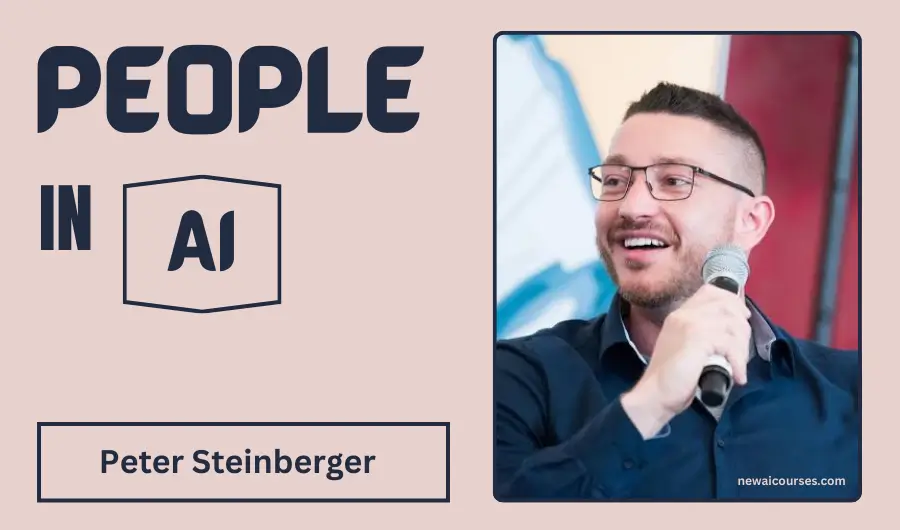
Peter Steinberger is an Austrian software engineer, entrepreneur, and open-source innovator best known for founding PSPDFKit and later creating the autonomous AI framework OpenClaw before joining OpenAI.
Early Life and Educational Foundations
Peter Steinberger was born in 1984 in Austria, where he spent his formative years and developed his foundational interests in technology, engineering, and computer science. He completed his early technical education at Austria’s HTL Braunau, a respected institution for applied sciences before advancing to the Technical University of Vienna (TU Wien), one of Europe’s premier technical universities known for rigorous engineering and computer science programs. His formal training provided deep technical fluency and also a strong grounding in systematic problem solving and algorithmic thinking.
Professional Beginnings and PSPDFKit
Steinberger’s first major imprint on the software engineering landscape came with PSPDFKit, a company he founded in 2011. PSPDFKit was conceived as a powerful developer toolkit designed to enhance PDF viewing, editing, annotation, and document processing capabilities across web and mobile applications.
At a time when PDF integration posed significant technical challenges for developers, PSPDFKit filled a critical gap and was adopted as a key infrastructure component by major technology platforms.
What set PSPDFKit apart was Steinberger’s bootstrapped, founder-driven strategy. He eschewed traditional venture capital early on, building the company through organic growth and close engineering-first engagement with developer communities. Over the course of a decade, the product scaled significantly, reportedly powering PDF functionality on over one billion devices worldwide, with enterprise clients in sectors ranging from cloud storage and enterprise software to automotive and telecommunications. Clients reportedly included widely recognized brands and platforms integrating advanced document workflows.
By 2021, PSPDFKit had matured into a robust business with a global footprint. A strategic investment from Insight Partners, reported in the range of $100–$116 million, marked a decisive monetization milestone, validating Steinberger’s long-term, founder-centric approach and enabling a partial exit that ultimately led him to step back from day-to-day operations.
Transition: Burnout, Reflection, and a New Vision
Following the PSPDFKit exit and an intense period of entrepreneurial commitment spanning more than ten years, Steinberger entered what he has openly described as a phase of burnout and existential reassessment. After years of relentless development and leadership responsibility, he took an extended sabbatical from core technology pursuits — a period marked by travel, personal exploration, and reflection on purpose and creative direction. This phase, though challenging, allowed him to reconsider how he wanted to contribute to the evolving technology landscape, particularly at the intersection of software and emerging AI.
During this transitional period, he maintained close ties to the developer community, continued experimental projects, and explored new paradigms in agent-based computing and autonomous software systems. This mindset of blending practical engineering with an exploratory spirit laid the groundwork for his next breakthrough.
Creation of OpenClaw: The Rise of an AI Pioneer
In late 2025, Steinberger launched what would become a defining project of modern artificial intelligence innovation. Initially developed over a weekend hack as a personal tool prototype, the project evolved rapidly into OpenClaw — an open-source framework for autonomous AI agents capable of executing real-world digital tasks autonomously.
OpenClaw distinguished itself from typical chatbot interfaces by emphasizing action-oriented functionality, enabling agents to process emails and automate correspondence, manage travel and calendar events, integrate with messaging platforms like WhatsApp, Telegram, Slack, and Discord, and execute tasks that traditionally required manual human input.
The project’s open-source nature accelerated its adoption within the global developer ecosystem. Within weeks of its initial release under names such as Clawdbot and Moltbot, the repository achieved hundreds of thousands of stars on GitHub, reportedly one of the fastest growth trajectories in open-source history. This viral adoption highlighted both a developer appetite for agent-centric tools and Steinberger’s ability to identify and implement usable engineering innovations with broad appeal.
Steinberger’s philosophy emphasized accessible agency: AI should not be a locked-down corporate product but an extensible system that users and builders can run locally, modify, and trust. This open ethos sharply contrasted with traditional closed ecosystems and cultivated a passionate, global community around agentic software innovation.
Joining OpenAI: A Strategic Career Pivot
In February 2026, Steinberger made a seminal career move by joining OpenAI, one of the world’s leading artificial intelligence research organizations. The announcement, confirmed by OpenAI CEO Sam Altman, positioned Steinberger at the forefront of the company’s push into next-generation personal AI agents, systems designed to go beyond conversation into practical autonomous action.
Altman publicly praised Steinberger as “a genius with amazing ideas about the future of agents interacting with each other,” indicating that his role would be instrumental in shaping how autonomous AI systems evolve into mainstream applications. While OpenAI did not disclose formal titles or specific organizational structures at the time of the announcement, the hiring was widely interpreted as a strategic talent acquisition and affirmation of Steinberger’s vision for agent-centric AI.
Crucially, OpenAI also committed to continuing support for OpenClaw as an open-source project through an independent foundation, preserving the community-driven and transparent development model that defined its early success.
Thought Leadership, Community Engagement, and Influence
Beyond his technical achievements, Steinberger has become a sought-after speaker and thought leader on topics such as open-source software, advanced agent architectures, and the future of human-AI interaction. Conference appearances, including a speaker role at the 2026 CASE Conference in Berlin, reflect his emerging status as both a practitioner and an influencer in the evolving landscape of software engineering and AI.
His talks often focus on agentic engineering — a paradigm in which software agents perform complex tasks autonomously — and the implications this has for productivity, software ecosystems, and ethical deployment. This dual role of an innovator and communicator has helped bridge technical innovation with broader societal discourse.
Legacy and Industry Impact
Peter Steinberger’s career trajectory illustrates a rare combination of deep engineering skill, entrepreneurial resilience, and visionary thinking: from bootstrapping a globally deployed software toolkit with PSPDFKit to pioneering agent-centric open-source AI software; from confronting burnout to reimagining his role in the future of AI and autonomous systems; and from independent open-source leadership to joining one of the most influential AI research organizations in the world.
His work on OpenClaw has not only advanced practical applications of AI agents but also sparked broader conversations about data ownership, decentralized AI infrastructure, and community-centric software ecosystems. As Steinberger continues his work at OpenAI, the implications of his contributions are likely to extend across industries and influence how software and AI agents integrate into daily life.
Personal and Philosophical Vision
Steinberger’s personal philosophy emphasizes practical human empowerment through technology. Rather than building closed systems that encapsulate power within corporate boundaries, his open-source and community-oriented approach aims to democratize access to powerful AI tools. This dedication reflects not only a technical strategy but a vision of technology as enabling agency rather than restricting it.
His journey from bootstrapped startup founder to open-source vanguard and AI innovator demonstrates a consistent theme: making complex systems usable, extensible, and genuinely helpful for people at scale.
AI Informed Newsletter
Stay informed on the fastest growing technology.
Disclaimer: The content on this page and all pages are for informational purposes only. We use AI to develop and improve our content — we love to use the tools we promote.
Course creators can promote their courses with us and AI apps Founders can get featured mentions on our website, send us an email.
Simplify AI use for the masses, enable anyone to leverage artificial intelligence for problem solving, building products and services that improves lives, creates wealth and advances economies.
A small group of researchers, educators and builders across AI, finance, media, digital assets and general technology.
If we have a shot at making life better, we owe it to ourselves to take it. Artificial intelligence (AI) brings us closer to abundance in health and wealth and we're committed to playing a role in bringing the use of this technology to the masses.
We aim to promote the use of AI as much as we can. In addition to courses, we will publish free prompts, guides and news, with the help of AI in research and content optimization.
We use cookies and other software to monitor and understand our web traffic to provide relevant contents, protection and promotions. To learn how our ad partners use your data, send us an email.
© newvon | all rights reserved | sitemap