

What is Supervised Learning?
Supervised learning is a machine learning method where models learn from labeled data to predict outcomes for new, unseen inputs.
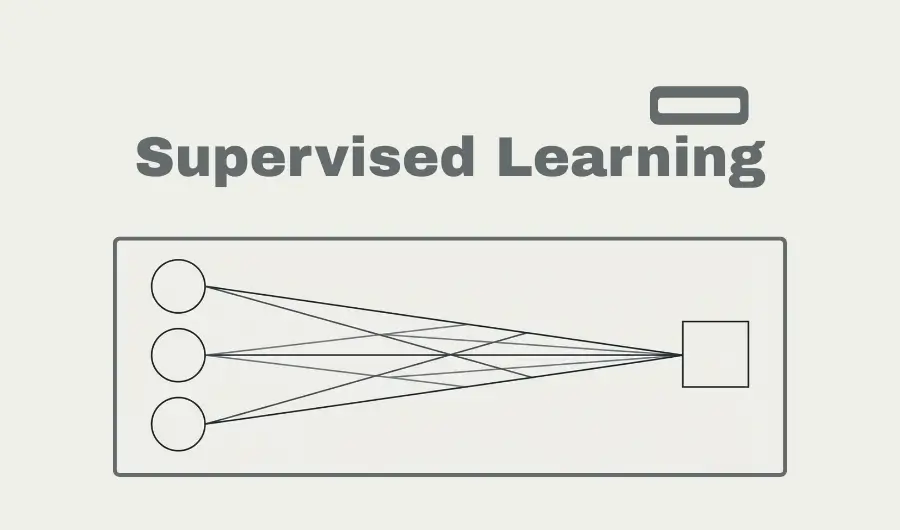
Defining Supervised Learning
Supervised learning is a core paradigm in machine learning in which an algorithm is trained using datasets that include both input variables and known output labels. During training, the model learns a mapping function that connects the input data to the correct output. Once this relationship has been established through iterative optimization, the trained system can infer predictions when presented with new data that lacks labels.
The defining characteristic of supervised learning is the presence of labeled training data. Each training example contains a pair consisting of an input feature set and the corresponding correct output. The algorithm evaluates the difference between its predicted output and the actual label, and then adjusts its internal parameters to reduce that error. This process continues through repeated exposure to data until the model reaches an acceptable level of predictive accuracy.
Supervised learning forms the technical foundation for many widely deployed artificial intelligence systems because it allows computers to approximate complex functions from empirical data rather than relying on manually written rules.
Historical Foundations and Academic Development
The conceptual foundations of supervised learning originate in statistical pattern recognition and computational learning theory developed throughout the twentieth century. Early research in classification and regression analysis established mathematical methods for modeling relationships between variables.
Work at institutions such as Stanford University and other research centers contributed significantly to the theoretical development of learning algorithms capable of generalizing from labeled datasets. As computational power expanded in the late twentieth and early twenty-first centuries, these statistical learning techniques evolved into the modern machine learning frameworks used today.
Large annotated datasets later accelerated the effectiveness of supervised learning. One influential example is ImageNet, a large-scale labeled image dataset introduced by researchers led by Fei-Fei Li at Stanford. ImageNet enabled researchers to train deep neural networks for image recognition tasks at an unprecedented scale, helping establish supervised deep learning as the dominant approach in computer vision.
How Supervised Learning Works
The supervised learning process begins with the construction of a training dataset containing labeled examples. Each example includes measurable input features and a target output value. The algorithm uses this data to learn the underlying function that connects inputs to outputs.
During training, the model generates predictions for each input and compares those predictions with the known labels. A loss function quantifies the difference between predicted and actual values. Optimization techniques such as gradient descent adjust the model’s internal parameters to minimize that loss. Over many iterations, the model progressively improves its predictions.
The learned function is then evaluated using a separate validation or test dataset that was not used during training. This evaluation stage determines whether the model has generalized the underlying relationship between inputs and outputs rather than simply memorizing the training examples.
Once validated, the trained model can be deployed to make predictions on new data. For example, a model trained on labeled medical images may analyze new scans to detect potential abnormalities, or a model trained on customer transaction data may predict purchasing behavior.
Classification and Regression Tasks
Supervised learning problems are typically categorized according to the type of output the model predicts. The two principal forms are classification and regression.
Classification involves predicting a discrete category or class label. A model trained for email filtering, for example, learns to classify incoming messages as either spam or legitimate correspondence. Image recognition systems trained using labeled photographs classify visual inputs into categories such as animals, vehicles, or everyday objects.
Regression involves predicting a continuous numerical value rather than a category. In regression tasks, the model learns to estimate quantities such as housing prices, energy demand, or temperature based on input variables. Classical statistical models such as linear regression represent early forms of supervised learning used for this purpose.
Both forms rely on labeled examples to guide the learning process. The distinction lies in the mathematical form of the predicted output and the corresponding loss functions used to train the model.
Algorithms Used in Supervised Learning
A wide range of algorithms support supervised learning tasks, each with different strengths depending on the structure of the data and the complexity of the problem.
Linear regression and logistic regression represent foundational statistical approaches for regression and classification problems. These methods model relationships between variables using linear functions and remain widely used for interpretable predictive modeling.
More complex algorithms include decision trees, support vector machines, and ensemble methods such as random forests and gradient boosting machines. These approaches improve predictive performance by capturing nonlinear relationships and combining multiple models.
In recent years, deep neural networks have become central to supervised learning applications involving large datasets and complex data types. Frameworks developed by companies such as Google and Meta Platforms allow engineers to train deep neural networks for tasks such as speech recognition, natural language processing, and computer vision.
Software libraries such as TensorFlow, originally developed by Google, and PyTorch, developed by researchers at Meta, provide widely used tools for implementing supervised learning models at scale.
Real-World Applications
Supervised learning underpins many practical artificial intelligence systems used across industry and research. Image recognition technology deployed in smartphones and cloud services relies heavily on supervised training using large labeled image datasets.
Speech recognition systems used in virtual assistants also depend on supervised learning. These systems are trained using audio recordings paired with transcribed text, enabling models to learn the relationship between spoken sounds and linguistic representations.
Healthcare analytics provides another significant domain of application. Medical researchers train supervised learning models on labeled clinical data to assist in diagnostic analysis and disease prediction. Systems developed within platforms such as IBM Watson have applied supervised machine learning techniques to medical literature and clinical records to support healthcare decision-making.
Financial institutions similarly apply supervised models to credit risk assessment, fraud detection, and algorithmic trading. In these contexts, labeled historical transaction data allows algorithms to learn patterns that distinguish normal activity from suspicious behavior.
Limitations and Practical Challenges
Despite its effectiveness, supervised learning presents several practical limitations that influence how it can be applied.
The most significant constraint is the need for labeled data. Creating high-quality labeled datasets often requires substantial human effort and domain expertise. In fields such as medical imaging or legal document analysis, the labeling process may require specialists whose time is expensive and limited.
Another challenge arises from the risk of overfitting. A model that learns the training data too precisely may fail to generalize to new data. Techniques such as regularization, cross-validation, and dataset partitioning are used to mitigate this problem and ensure reliable predictive performance.
Bias in training data also presents a serious concern. If the labeled dataset contains imbalances or systematic distortions, the trained model may reproduce those biases in its predictions. Addressing these issues requires careful dataset design, auditing, and ongoing monitoring of model behavior.
Distinction From Other Machine Learning Approaches
Supervised learning differs fundamentally from other machine learning paradigms in the way training data is structured.
In unsupervised learning, models are trained using data that does not include labeled outputs. Instead of predicting specific outcomes, unsupervised algorithms identify patterns or structures within the data itself, such as clusters or latent representations.
Reinforcement learning represents another distinct paradigm in which an agent learns through interaction with an environment and receives feedback in the form of rewards or penalties rather than explicit labels.
The defining feature that distinguishes supervised learning from these approaches remains the availability of labeled training data that directly specifies the correct output for each input example.
Continuing Importance in Modern Artificial Intelligence
Supervised learning remains one of the most influential techniques in modern artificial intelligence because of its reliability and scalability when large labeled datasets are available. Advances in data collection, distributed computing, and neural network architectures have expanded its capabilities across fields ranging from language modeling to scientific research.
Although emerging approaches such as self-supervised and unsupervised learning are gaining prominence, supervised learning continues to serve as the primary training framework for many high-performance AI systems. Its ability to transform empirical data into predictive models ensures that it remains a central method within machine learning and applied artificial intelligence research.
AI Informed Newsletter
Stay informed on the fastest growing technology.
Disclaimer: The content on this page and all pages are for informational purposes only. We use AI to develop and improve our content — we love to use the tools we promote.
Course creators can promote their courses with us and AI apps Founders can get featured mentions on our website, send us an email.
Simplify AI use for the masses, enable anyone to leverage artificial intelligence for problem solving, building products and services that improves lives, creates wealth and advances economies.
A small group of researchers, educators and builders across AI, finance, media, digital assets and general technology.
If we have a shot at making life better, we owe it to ourselves to take it. Artificial intelligence (AI) brings us closer to abundance in health and wealth and we're committed to playing a role in bringing the use of this technology to the masses.
We aim to promote the use of AI as much as we can. In addition to courses, we will publish free prompts, guides and news, with the help of AI in research and content optimization.
We use cookies and other software to monitor and understand our web traffic to provide relevant contents, protection and promotions. To learn how our ad partners use your data, send us an email.
© newvon | all rights reserved | sitemap